Postcard Pairings

Although I had hoped the Wattis Institute webinar Catching Ideas in Process: Jay DeFeo’s Photography  would have focused more on the individual photographs of Jay DeFeo, I was nevertheless intrigued by the young artists explanations of how she continues to influence their work. With moderator Emily Markert  panelists included: Corey Keller, Paul Mpagi Sepuya and Rayyane Tabet.

It was a surprise to learn about the 2500 postcards that DeFeo kept and used on the walls of her studio as images to inspire and in the compositional strategies of her photographs. In her life and in her work she was always keen to blur the line between documentation and art

As keepers of postcards, both the Rev and the Co-Rev have collections saved over many years and many travels.

When, on March 17, the mandate to shelter-in-place went into effect we thought, no problem we can do this… as artists we could not think of anything better than to just lock ourselves away in the studio.

As the mandate continued until April 7, then was extended again and again, by May the reality of the COVID-19 began to sink in. We joked about this time as our “Covid Vacation” but as many of our exhibition opportunities were cancelled, we started thinking about new ways to show and share our artwork.

Which brings us to the postcards and the bulletin board at our Forest Knolls post office. Typically the bulletin board is covered with flyers and posters and community announcements. It’s the go-to place for what’s going on in the San Geronimo Valley and since everyone in FK goes there, we thought it would be the perfect place for an art exhibit.

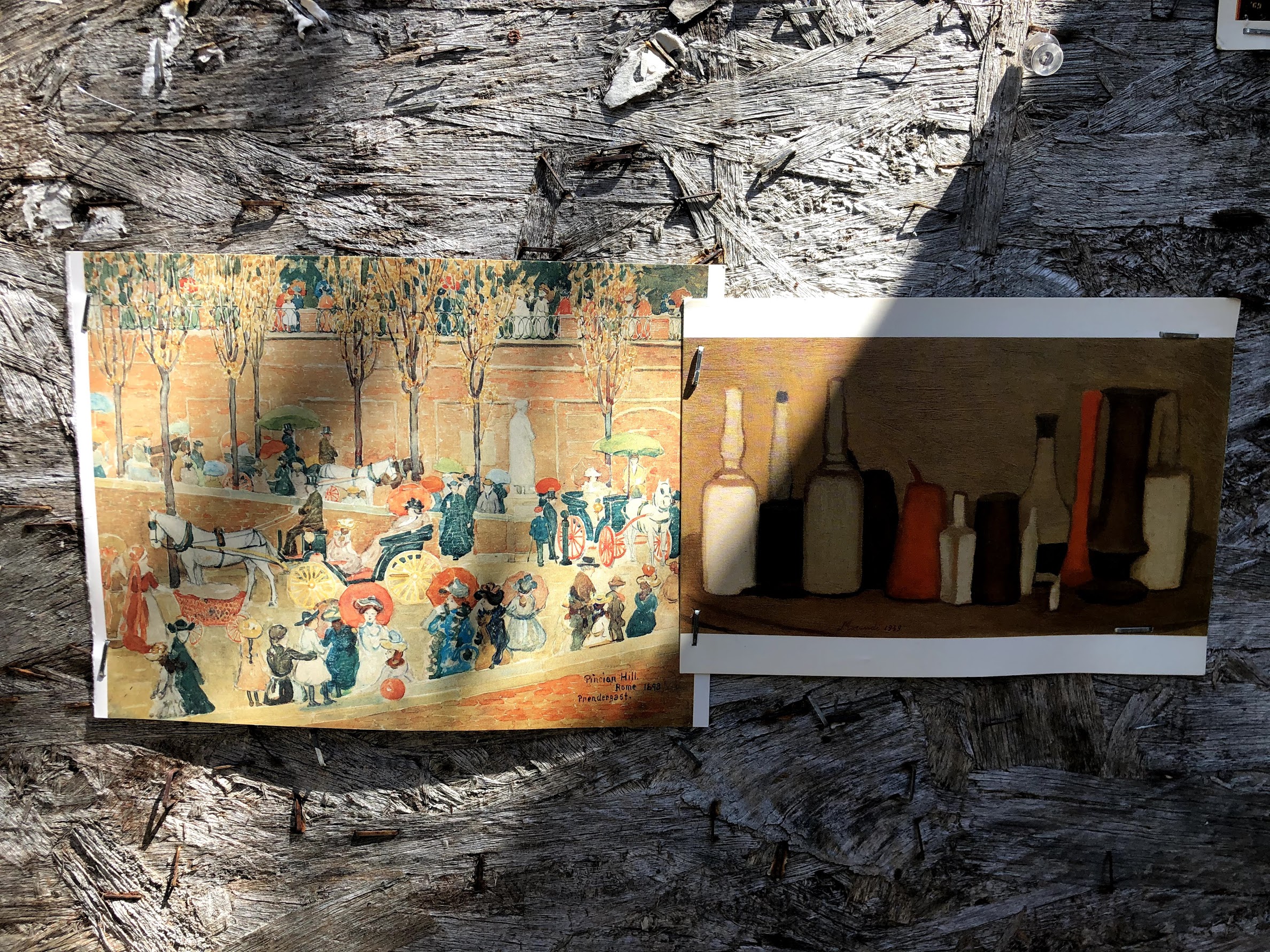
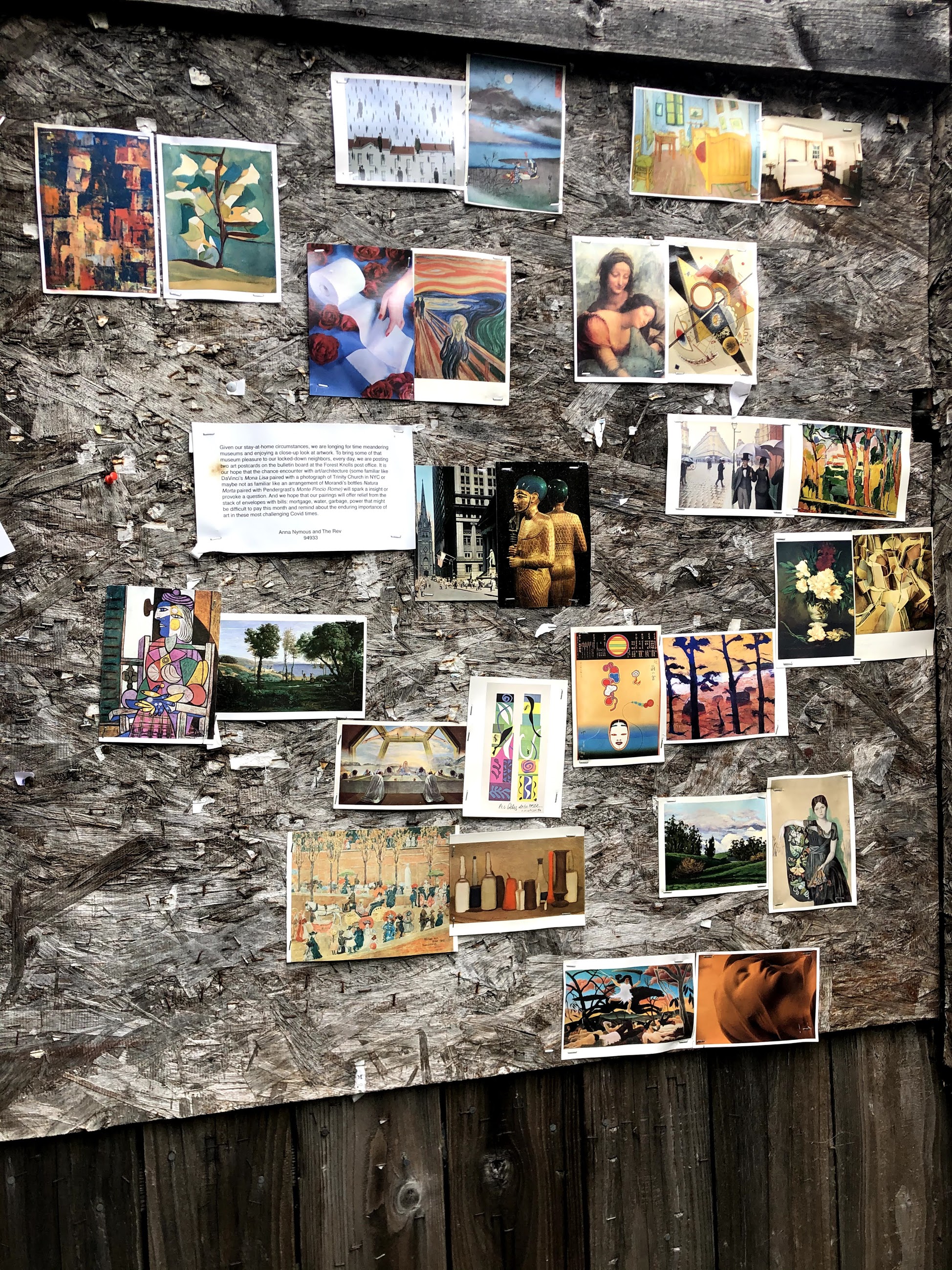
Given our stay-at-home circumstances, we were longing for time meandering museums and enjoying a close-up look at artwork. To bring some of that museum pleasure to our locked-down neighbors, every day, we posted two art postcards on the bulletin board. It is our hope that the chance encounter with art/architecture (some familiar like DaVinci’s Mona Lisa paired with a photograph of Trinity Church in NYC or maybe not as familiar like an arrangement of Morandi’s bottles Natura Morta paired with Pendergast’s Monte Pincio Rome) will spark a insight or provoke a question. And we hope that our pairings offer relief from the stack of envelopes with bills: mortgage, water, garbage, power that might be difficult to pay this month and remind about the enduring importance of art in these most challenging Covid times.
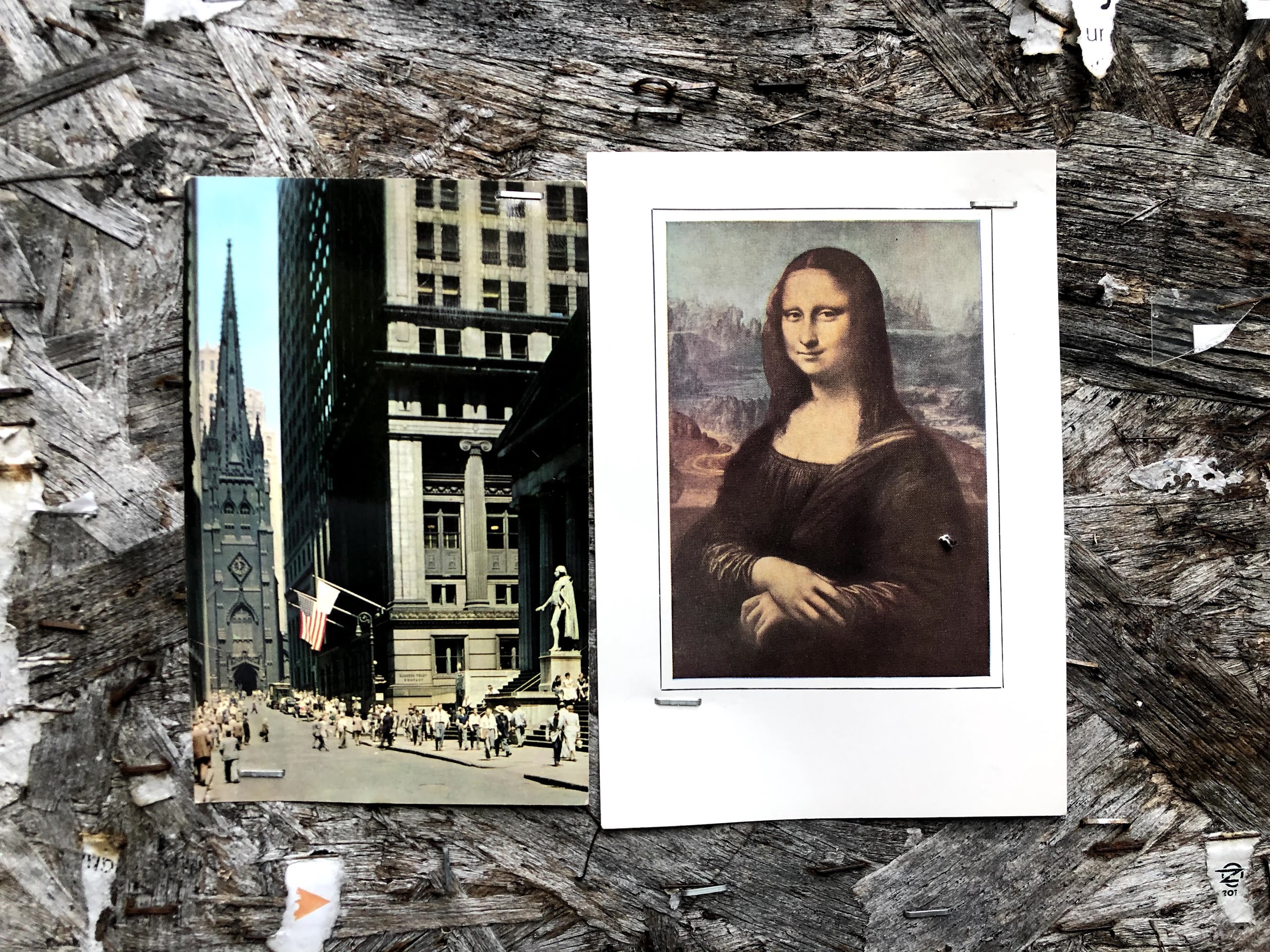
1. IMG_8461

6. IMG_8654

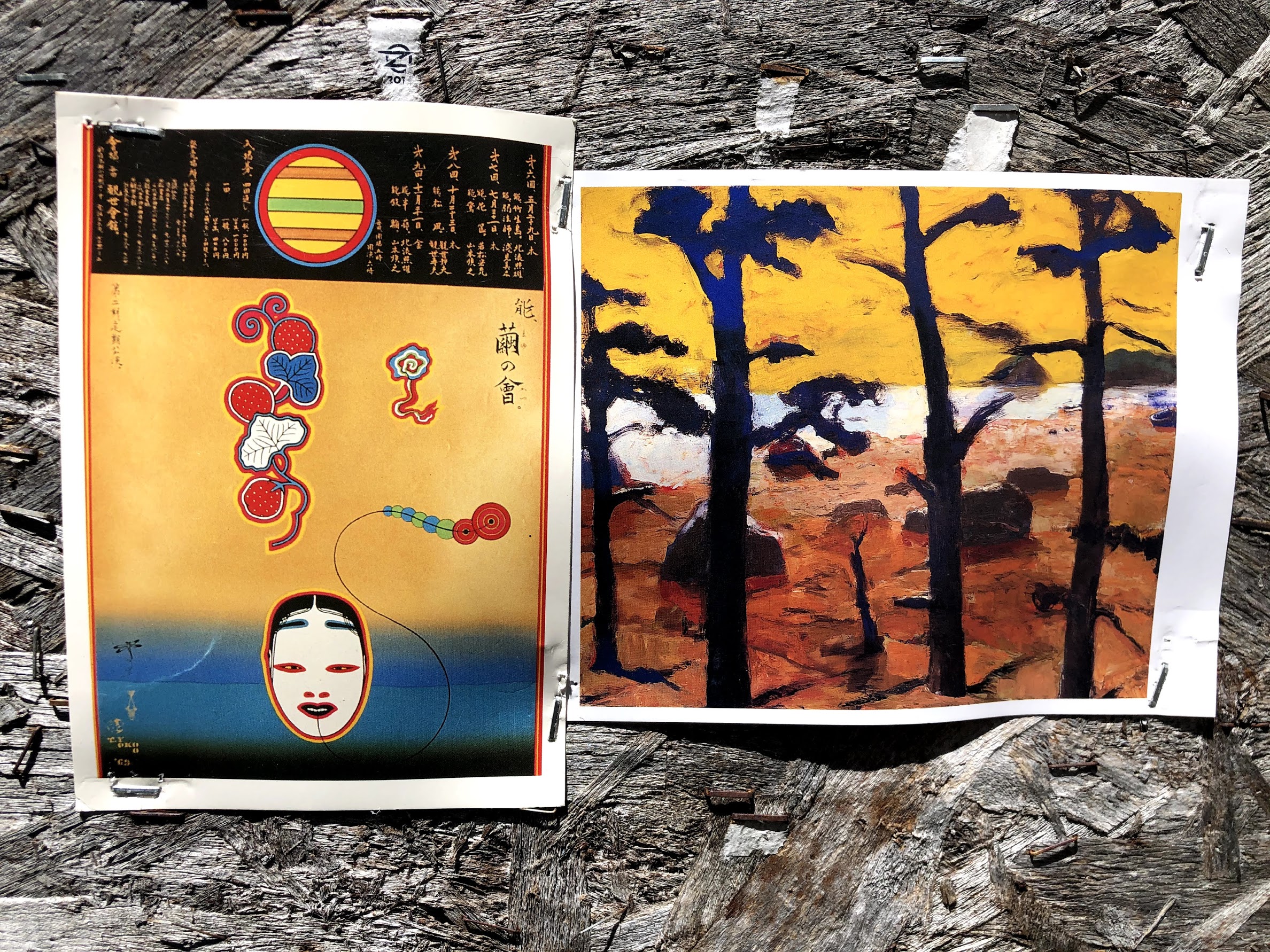
Every day, we shuffled the cards in the big basket of art cards then in an intuitive, spontaneous way selected two that called out. The call could be the color, the design, the texture. With these two, the band of yellow ochre was the unifying force. The contrast between the expressive brushstrokes of the Elmer Bishcoff’s Yellow Sky, 1967 (right) and the considered constructed design of the Tadanori Yokoo Poster for Noh Play 1969 (left) made for a perfect compare and contrast of texture.
2. IMG_8568

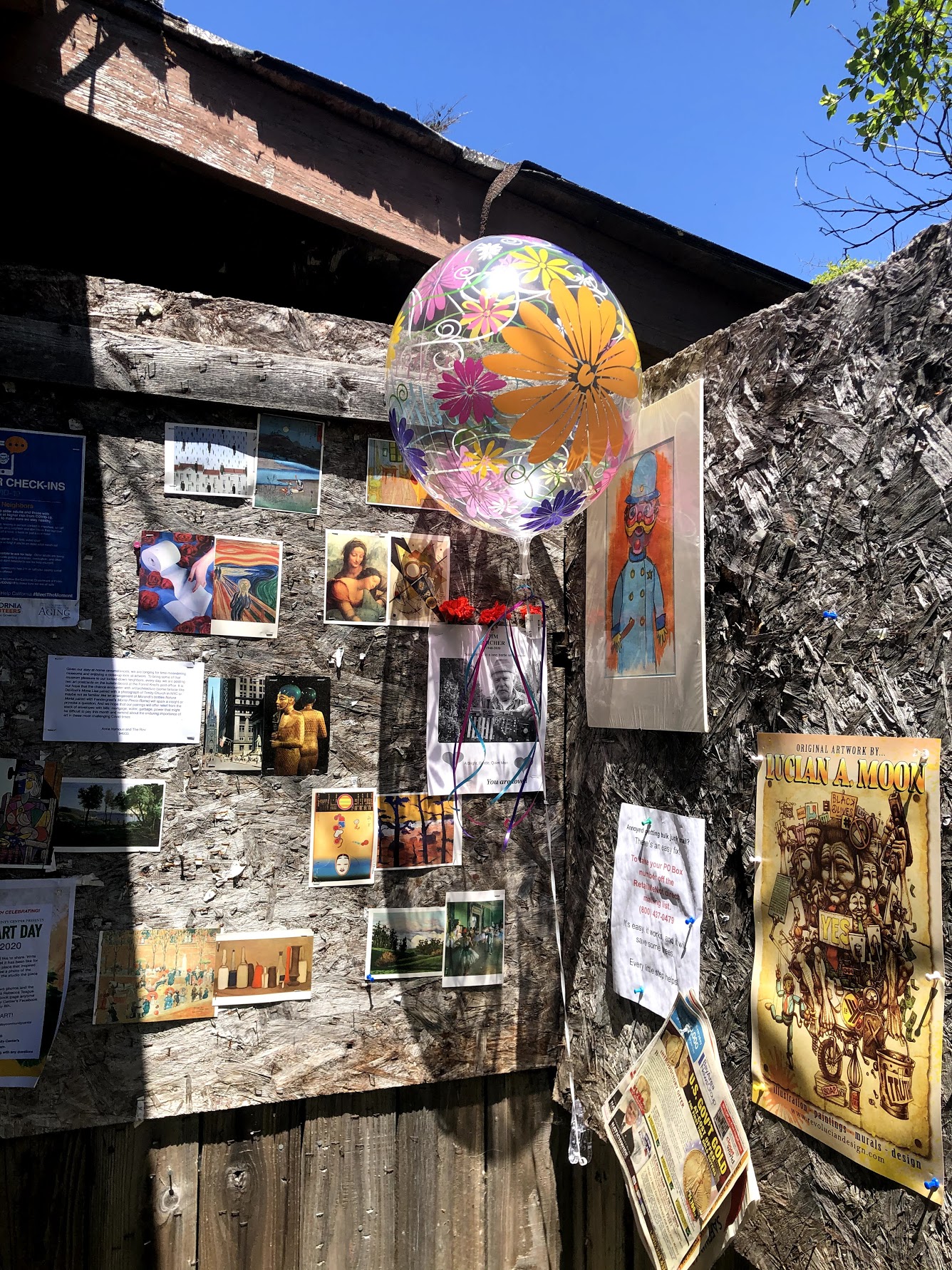
Everyday a new pairing was posted and sometimes we had to put a replacement card for ones that were “stolen.” As our cards acculumlated, other people began to add to the gallery. Some bright red flowers were added to a memorial announcement. To celebrate a birthday, someone added a balloon. We sensed that there was community appreciation for our efforts. This corner of communication was alive. Not sure about the intended message of the drawing of a ruddy-cheeked British Bobby??? but the colors were bright.
9. IMG_8750

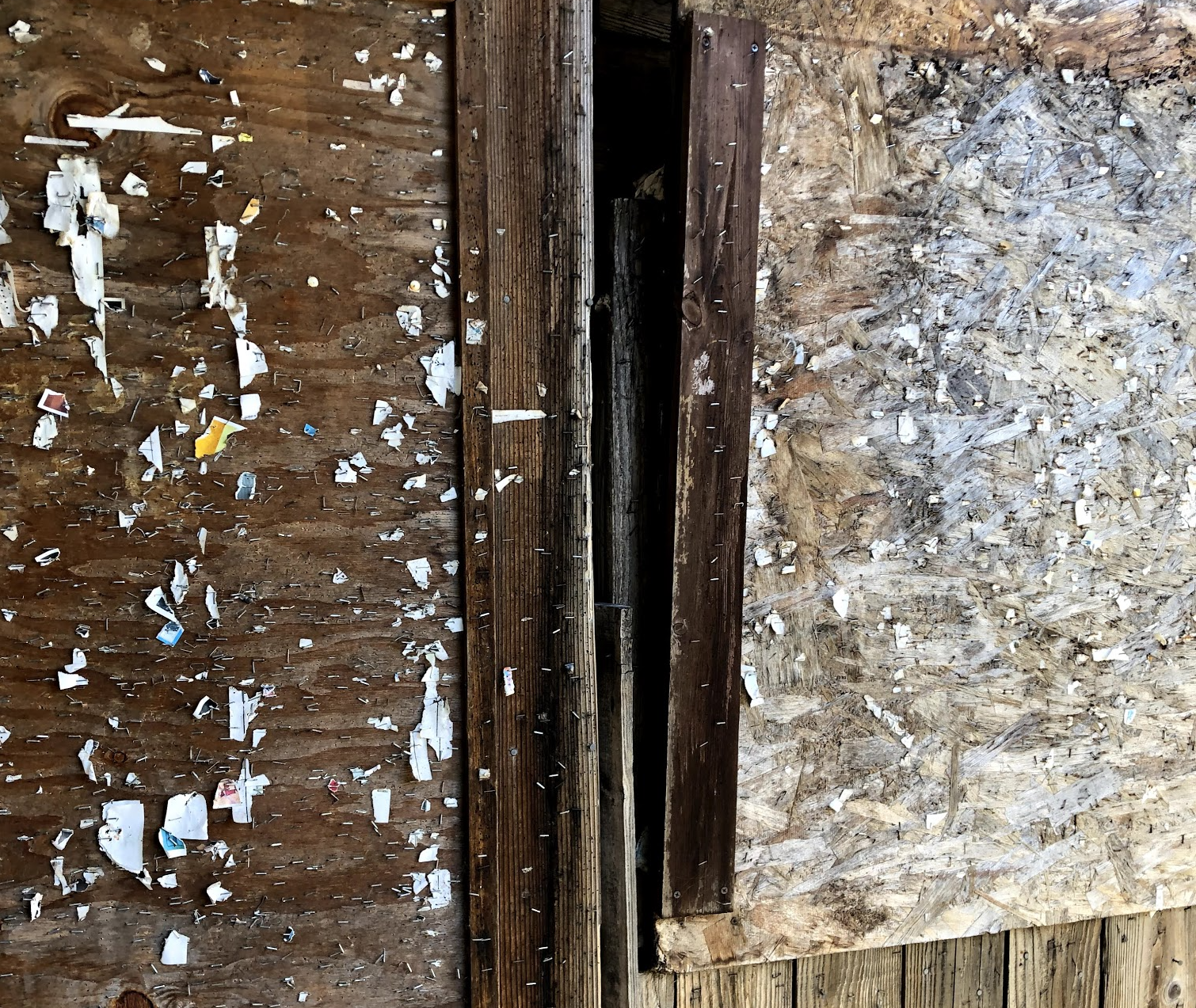
But one day, the bulletin boards was stripped bare. Empty!!! Not only were all of the postcards gone but all of the flyers, posters and community announcements were gone, too. The only trace was the tattered remnants of papers and the staples.

It was a shock. It remains a mystery about who or why everything was removed. The bulletin board remained bare for some time. Eventually a flyer appeared but soon, again, inexplicably the bulletin board was stripped bare. Is this a message about the gloom of isolation? Or the dispare of remaining imageless?
IMG_8866Bulletin Board 1088

Not only in the pairings but in the overall presentation on the board showcased the absolute variety of the artistic response to landscape to portraiture to still life.

Disorderly, yes, in a cacophony across time and space
Incongruities, yes, how do ____ and ____ go together?

We had hoped to evoke what Peter Schjeldahl describes as a “theraputic delirium “ as he roams the newly reopened Met and the 150 year anniversary show exhibition “Making the Met.”

We won’t be going to the Met anytime soon and our bulletin board gallery has been torn down but we still have an enormous basket full of postcards that will continue spark creative reveries and invite compares and contrasts.
Crescent Bridge and postcardsjpegNeri_comm-e1586291685443

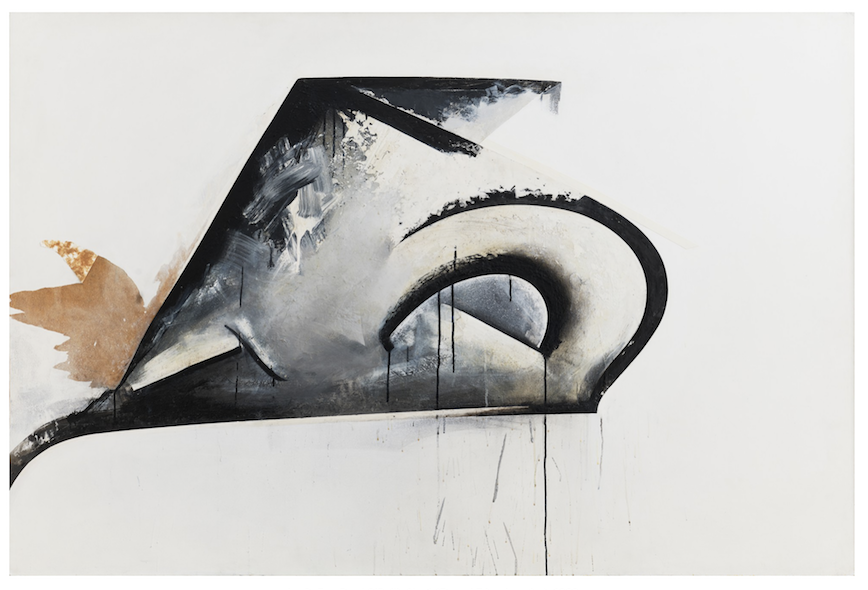
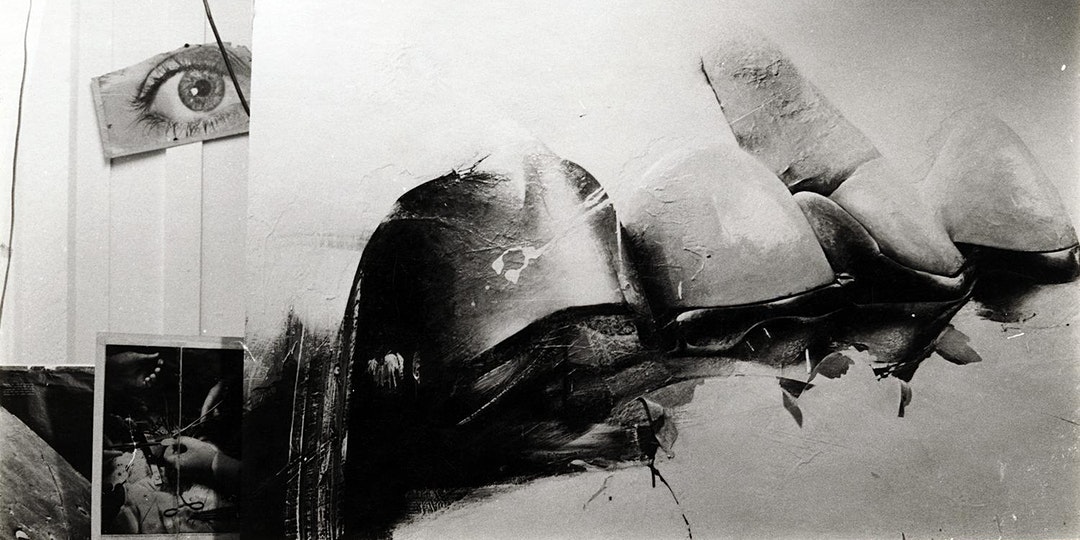
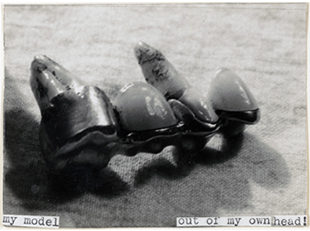
It’s been a big dental time around here. Since the Covid sheltering and restrictions, our routine care had been delayed and delayed. The Rev had a tooth that should have been pulled months ago and the Co-Rev was in need of replacing two old and broken crowns. This week all of that work got underway AND we came to understand DeFeo’s fascination with her tooth bridge. Her intimate photos of her model that came “out of her own head” were writ large in here painting Crescent Bridge 48″ x 66″.
Look, See, Say … and so much more …

img_6242

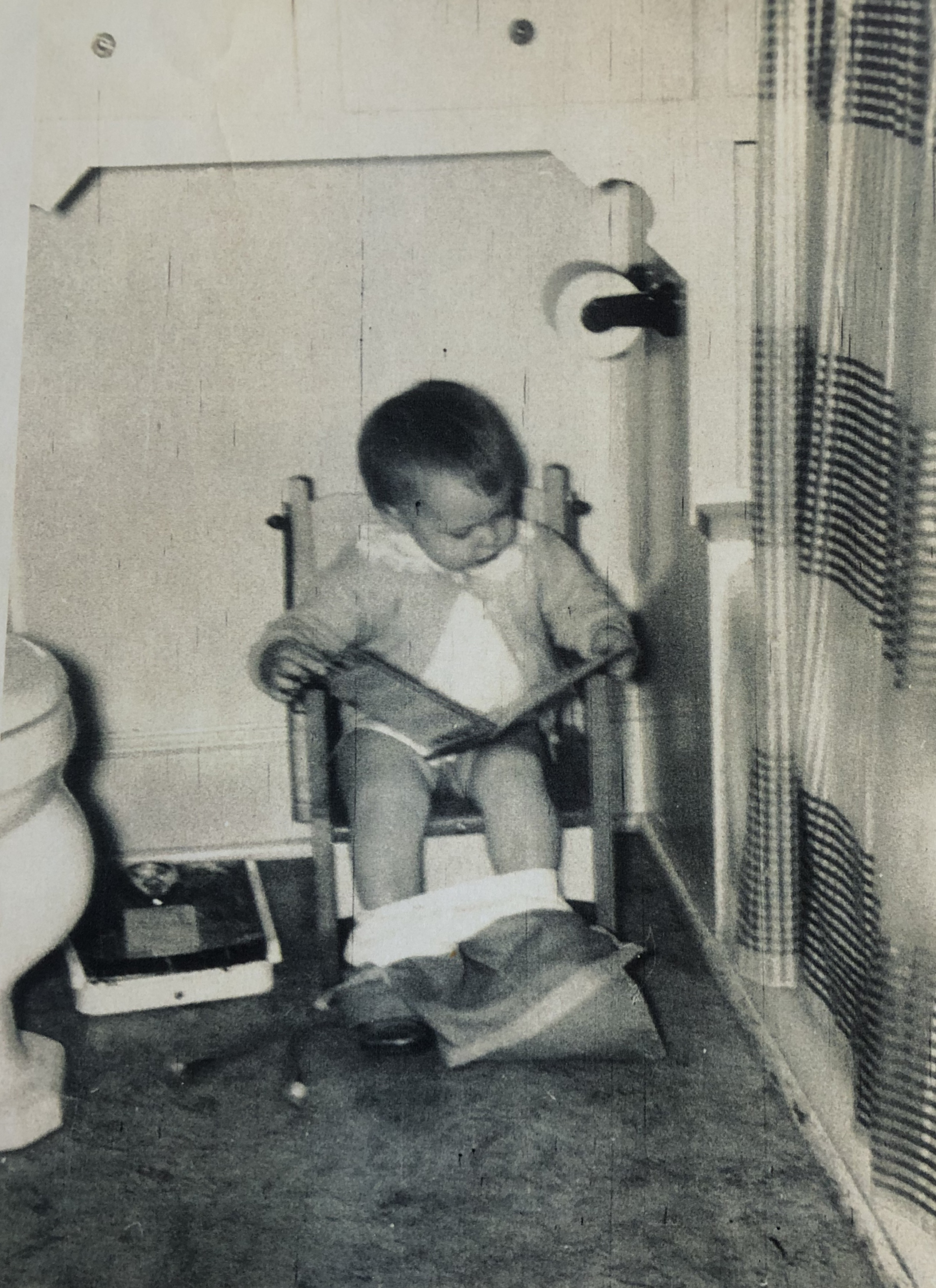
Since time immemorial, anytime, anywhere, I’ve loved to read. At age 2, I would turn the pages and marvel; transported by adventures beyond my limited knowledge of different cultures, histories, and societies.
At age 4, reading introduced me to life and people in real and fantastic ways. It ignited my imagination, taking me around the world. Without ever leaving home or school, I could walk in someone else shoes.

img_6243

Fortunately, in first grade, my reading ability was encouraged by my teacher. When it was reading time, I sat with two others in the hallway with advanced story books while the rest of the class was still making their way through Dick and Jane —  look, see, say. Like most every kid in the 1950’s I teethed on Dick and Jane and Spot the dog and Puff the cat. I was unaware of the sub-text of gender stereotypes because my mom and dad were living the 50’s dream. My mom stayed at home to take care of the children (me) and keep house, while the my dad went to work. I did not even know that racial and cultural diversity was missing because of the white middle class milieu I was growing up in. But, books offered possibilities beyond the constraints of my neighborhood.

DickandJanePlayDadandMom

Although my parents were proud of my academic prowess and encouraged my success, books were not much in evidence in our household. My mainstay was a set of World Book Encyclopedias where I poured over the illustrations of international costumes and customs, beckoning me to a wider world, showing me how different people lived and expressed themselves through their dress. My curiosity piqued, I longed to know more about everything. 

This slideshow requires JavaScript.

In college and thereafter I was able to realize my need to live surrounded by books. Even when money was scarce, buying books came first. I would purchase some to read right away and some for the future. Sometimes, even if I felt was not ready for it, I would buy a book and put it under my pillow, hoping that as I slept the wisdom would seep in.

With Richard I met my match. His love of books is at least equal to mine….so over the years we have amassed bookshelves full, that spill over on to the floor and stack high on our bedside tables. We never seem to find the time to organize the hodgepodge on our shelves so they remain in a mishmash of genres with no sorting of fiction and non-fiction: science is mixed with travel adventure, poetry is interspersed with memoir.  Try to find a book? HA! The good thing about this lack of a system is that one never knows what one might find.

Oh, if only, to live with an orderly arrangement like Chris Cobb’s rainbow display at Adobe Books, SF, 2004.

Bum8VxoCQAAP1hO

Buying books can be an addiction and now with online vendors of used books Thriftbooks and Abes Books it is especially easy to fuel. The obsession can easily be justified because the booksellers tout their environmental efforts that save millions of old books a year from the landfill.

To run with the gamut from potboilers and classics to paperbacks and rare fine artists books, with walls lined with stories is both challenge and comfort. In the night when I can’t sleep I’ll go to the bookshelf and slide out an old friend — reassured that the story is there again and again for me to enjoy. Grateful to the author who struggled to put their words to paper and grateful to the team of people: editors, illustrators, publishers who invested time and energy to bring those words to the public (me).

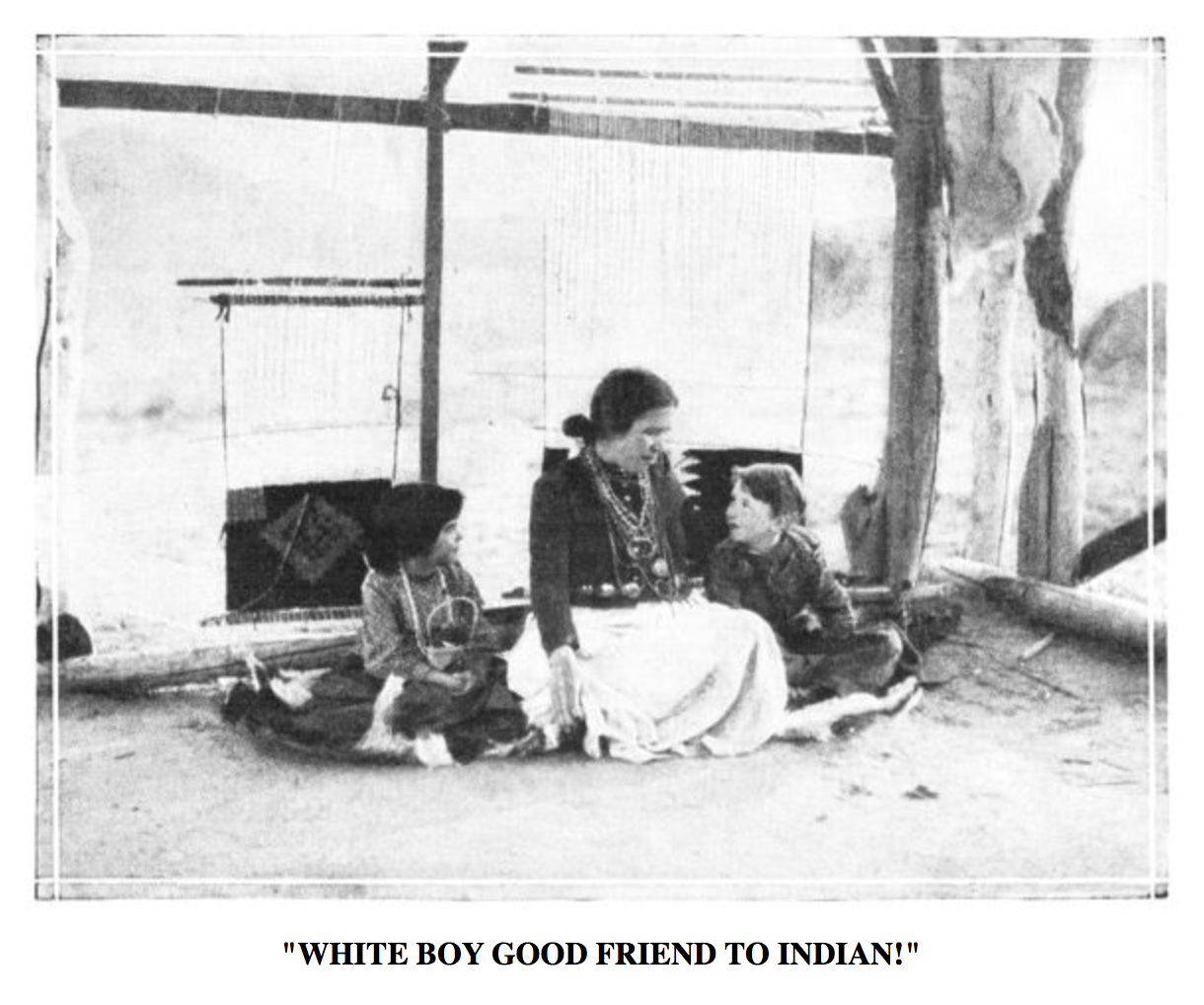
I have no recollection of when or how The Little Indian Weaver book came into my life some sixty or so years ago. But I can recall how much I enjoyed learning about people different from myself. Although today some of the descriptions might be passé even offensive, it remains a touching story about the friendship between a white boy and an Navaho Indian girl. 

Indian Weaver

As a filmmaker and author Madeline Brandeis devoted herself to telling stories geared towards use in the elementary-school classroom illustrated with photographs she took on location with “Ref”, her trusty reflex camera. She produced 14 volumes in the popular series The Children of All Lands. After her untimely death in 1937 at the age of 39, four additional book were completed.

This dedication by Madeline Brandeis so beautifully expresses why I love this book:
To every child of every land,
Little sister, little brother,
As in this book your lives unfold,
May you learn to love each other.

All of Brandeis’s books can be borrowed from the Internet Archive.
Project Gutenberg’s copy of The Little Indian Weaver.
A film of The Little Indian Weaver in the Prelinger Archives


Mary reading

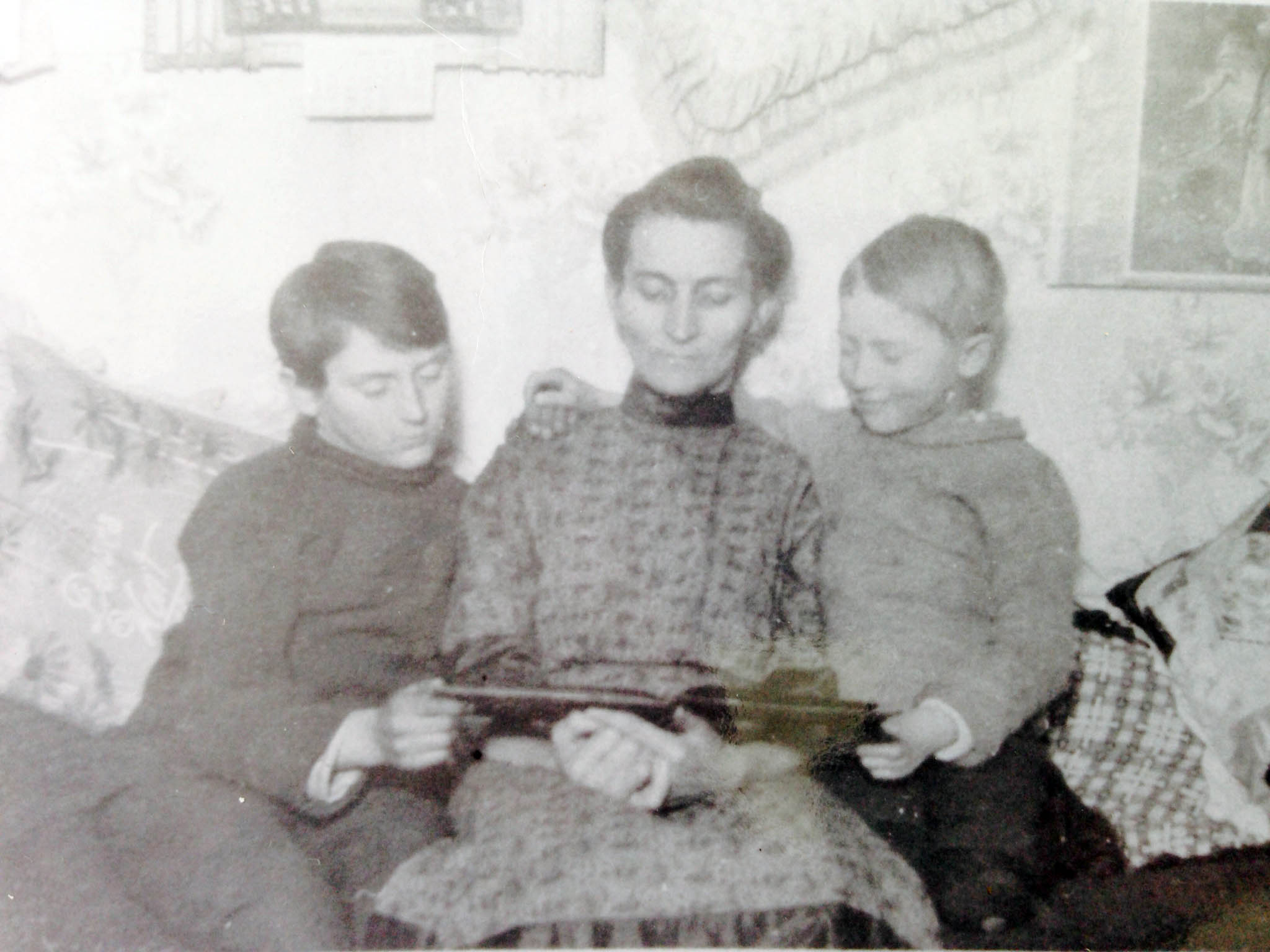
This photo is one of only three that I have of my Great Grandmother Mary. It is especially precious given how limited photography was in the 1910’s. Although Kodak’s Brownie was already popularizing photography, I can only surmise that in Montana taking a picture was still a rare occasion. That Mary wanted to stage a scene of her reading to her boys – my Grandfather, Edward 1901b (right) and his brother Art 1894b (left) is evidence of the value she placed on reading.

As a child my wildest imagination was stoked by the likes of Winnie the Pooh, Mole, Rat and Mr. Toad, Peter Pan and Tinker Bell, The Little Prince, Huck Finn, Dorothy from The Wizard of OZ plus the fairytales of Grimm and Andersen.

My roll call of characters continues to grow. A few of my classics include:
Doc in John Steinbeck’s Cannery Row
Stephen Dedalus, in James Joyce’s Portrait of the Artist as a Young Man
The Father in Cormac McCarthy’s The Road
Gregor Samsa in Franz Kafka’s The Metamorphosis

This week Mind Games bring us closer to the closest character in our play book — a deep look at the possibilities in being someone else and in experiencing someone else being you. As an exercise in role playing we will explore how empathy and understanding can be enhanced to benefit interpersonal relationships.

This can be played with a partner or while looking at yourself in a mirror.

room-without-books-quote

The Call. The Laws of Nature are Compatible with the Laws of LOVE.

A person steps into a life’s work. Leaving behind a rubble of false starts, then it arrives. The disappointment was with the sometimes snarky, sometimes “smart” world of conceptual art, art that could be played as a game, a complicated game which was a fun game to watch, to follow the stats, to know a bit about the players, keeping a box score-card as you watched, but really you wanted to be a player on the field, to feel you’ve been dealt in. It felt like being on the inside of something special to be an artist working away in a studio. And, as a youngster you wanted to play the game as it was laid out, a lot of indirection coming from the glossy art mags, dry ole’ Duchamp and beefy sweaty ole’ Picasso dukeing it out in your mind, but there was something subrosa. Some hidden call to talk about spirit and soul. The filament inside the bulb. To be in that world bringing all your on-the-job training to shoulder the wheel of ART along, felt like being in a WPA mural of heroic workers… working your way out of some cul-de-sac caves as part of the journey. If you were an artist you were preparing yourself to head down into some unknown glen. Being an artist can make you feel as if you lived in rarefied land separate from the world. But my connection with the living world had always been a source for sparking inner connections,  growing up in a town with a slow river and a wild-ish woods nearby. “Lets head out, I’ve heard Tule Lake on the Oregon/Cali border is full of birds. Especially in the fall.” I like looking at birds. So did a lot of waterfowl hunters on a similar (but different) trajectory.

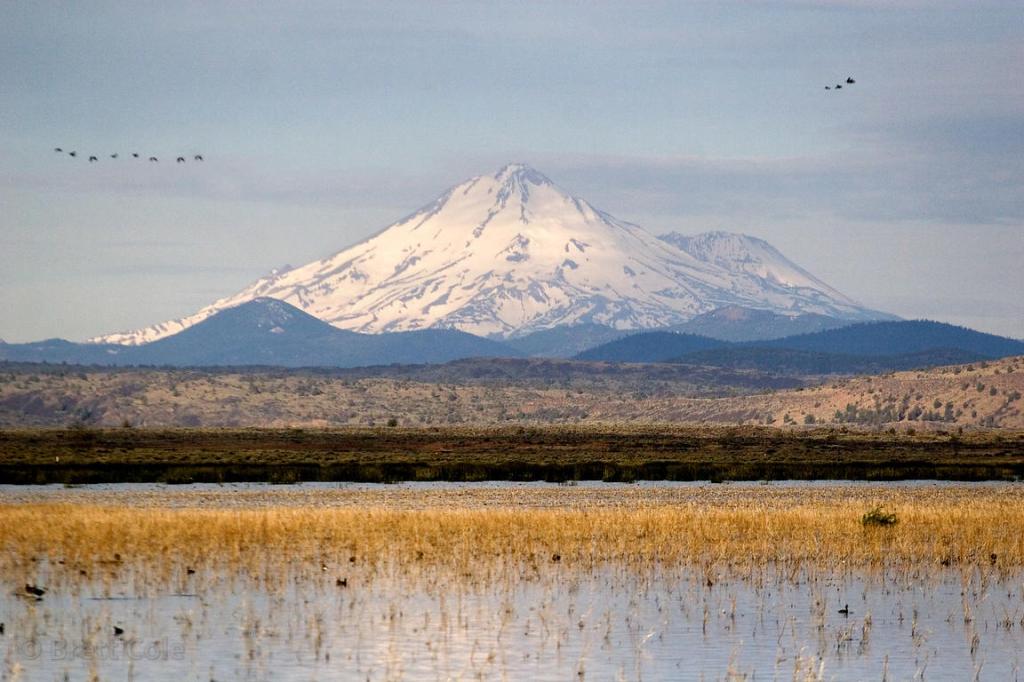
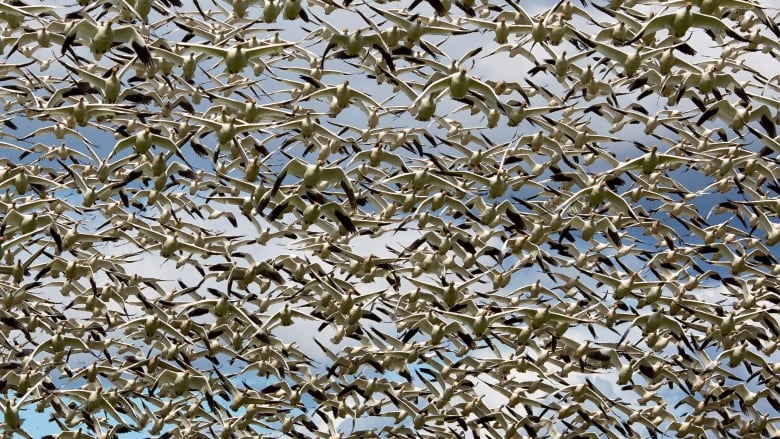
The Mt. Shasta watershed is centered on the mountain, of course, but surrounding the mountain is a low-lying sedge land, perfect for rice farming with ample water and also perfect for ducks, geese, and swans. It’s as though Darwin were at work creating a proof of landscape giving rise to speciation. This landscape with the tall peak flowing away on all sides, a dominating two peak volcano, Shasta and Shastina rise purpley blue to 9600 feet from the valley floor. A mountain’s mountain. A distinct shape easy to lock into the mind as a picture. At Tule Lake the view of the mountain is to the south and looking into a late day sky, starting in early November, you can watch skeins of ducks weave back and forth across the sheer light of the sky as it dips into rosey sunset. The purple mountain, a woodblock. Then, standing braced against the wind, at the edge of the water, 10,000 birds burst up all at once, filling your chest with a thrum. Rising up the front of your neck comes a sob, a chortle, some sound you’ve never  heard yourself make. This is it, the only thing to talk about is this. And its been so all of my life since, striding to meet that leafy green heart of beauty, the sunlight going to white on a damp leaf. The laws of nature are compatible with the laws of love.The laws of nature are compatible with the laws of love.

snow-geese-stable

I’d already gotten the call to do this, been called to this, to paint pictures, Its what excited me. I had already passed through the gate of wondering if I was on the right path, but I needed a refresher. The gospel song says TAKE ME BACK TO THE PLACE I FIRST RECEIVED YOU. The shape of the call wears thin after a lot of head-down work in the studio and classroom. I’d worn a groove in the pathway. “I’m a watercolor painter,” I had declared. But I wanted a refresher “A lot of work can be churned out, then shoved aside like a broken-down carnival parade. So, Papa wants a brand new bag. Leanin’ into a groove. It don’t mean a thing if it ain’t got that swing…I was at a standoff with myself. So listen, my “call” to paint pictures started as a joke

07198365-1
Voice of Fire

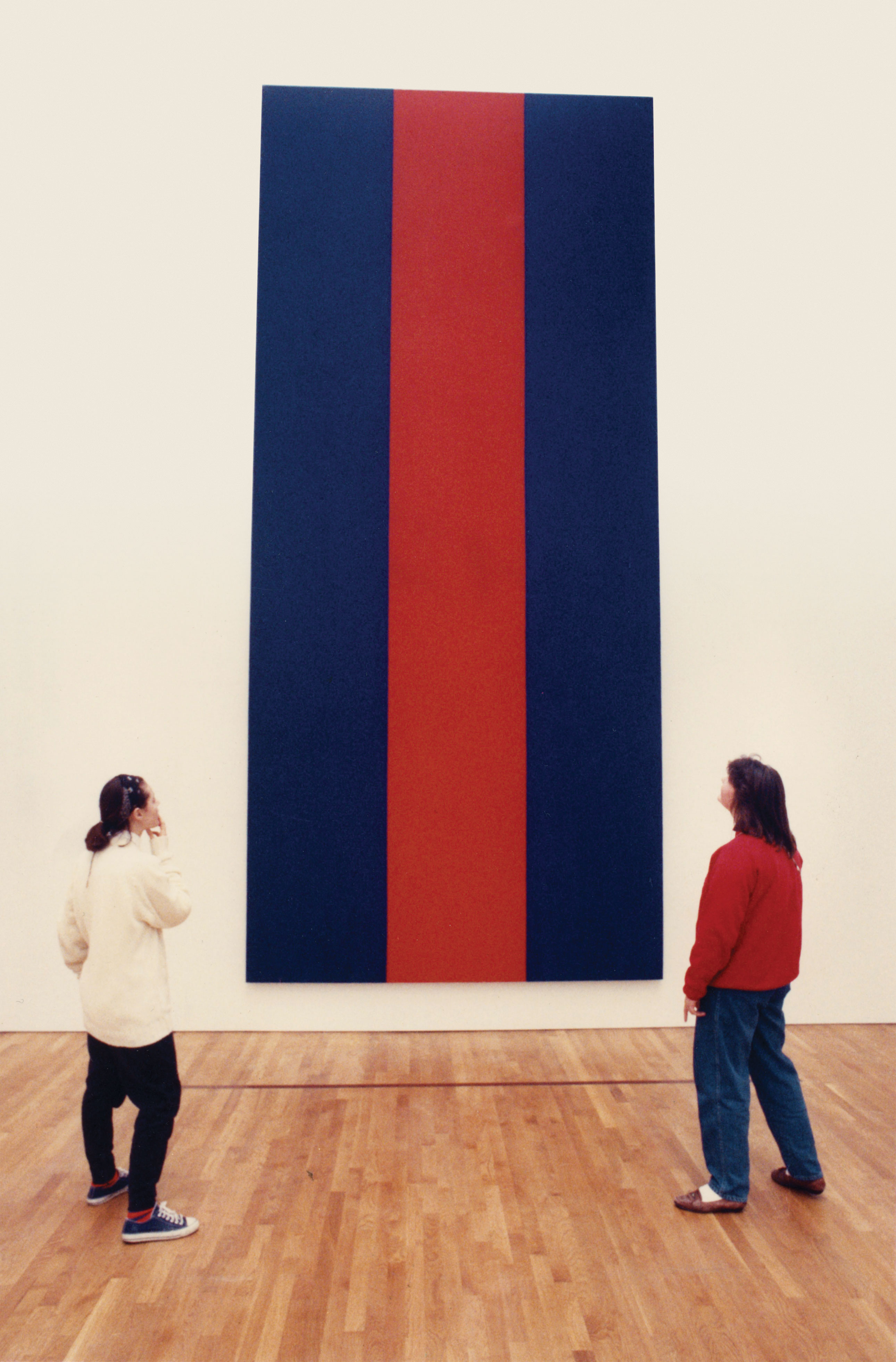
 Is it worth the effort? Start with hardest to fathom—sure you KNOW its good (maybe because the fancy people say it is) The sly smile of being in the know through increasingly the sales and martketing department had taken over the tower of curated quality. Don’t get me wrong, I truly love the part of the mind/body that can turn art into philosophy, But in the studio it felt like a brick chamber, the walls sweating with damp, trapping the urge to make stuff, locked away in a hot vault, of cool,  I know better. We were at the end of history, weren’t we? The Zero Point. What was there to say? TV and movies was all the visual information you needed. Painting was silly as Barnet Neuman pointed out with his Voice of Fire… You go, “What the…” Mere presence was the point,  painting pictures like the Voice of Fire pointed. The existential moment captured, there is only this, this presence of color. OK, fun to think about and work out the puzzle of: what is this, this “my child could do this”, this so-called painting, is so reveared, and it’s latest auction price hovering in the $40 million range. This is confusing for all of us, but fun for the mind engaged in thinking about art to figure out, as  I had started on a course of fighting even the notion of painting itself—a dead language, I assumed, with the prevailing language of minimalism ruling the roost, minimalism and conceptual art ready in the wings. So I said in 1970 for my senior in college, last class of my undergrad career:

I wrote, for my senior seminar art class (this is 1970)”I propose to move to Cape Cod and learn the art of touristic best seller watercolors and exhibit those watercolors at a fashion-centric, trend setting gallery in NYC..” It would be as a poke in the eye to the high priests guarding the holy sepulcher. Testing the notion of high art/low art. And, bringing  the question of art and high-finance to the front of discussion. I wanted to ask the question raised by this “action” as we called conceptual projects. Projects which would ask and answer questions of value and quality; questions high on the conceptual agenda. “Is this any good at all?” Then 3 years later in grad school seminar I found my advisor had done something similar. Researching the top sellers at the Gump’s Art gallery, Steve Kaltenbach, tried to formulate a top selling painting using their database of what had sold. It was a funny art-world inside joke. But me, I just liked fooling around with stuff, and here were thought experiments, that actually BECAME stuff.  This was just not done. Narrative was out, outrez,  and, I want to do it in watercolor, the medium itself as cheesy and disdained as it gets. Fusty, a has-been medium, an old lady medium, a disdained lavender, queer-world medium.  At least in my mind, the  carnival barker, critic trading on his will to be heard, shouts in the glossy art mags, that art was not about stuff. Maybe Art was lifestyle, maybe art was an idea like say—have your name changed every month for a year, and have it registered legally in the courts as my instructor and advisor Ed Mc Gowin had done, in whose very class I had proposed my vacation watercolor project.  Like McGowin, printing up the court documents and mounting  them on a wall in his gallery, have Betty Parsons sell them,  I would show framed advertisments, and the review in ArtForum. Hey,! whats the big idea? Exactly.  Questions? Yes indeed. Identity and value on the docket at the “Critical Dialogue” court of what’s authentic.

So, there!!!  I abandonded work on my project my project with a watercolor, actually painted while living on Cape Cod where I discovered painting was a  kind of thinking, wholly satisfying. Several years maybe 5 or 6, I’ve waded through all this working stuff as thought  and still, my message and my mantra remain the same: The laws of nature are compatible with the laws of love. The laws of nature are compatible with the laws of love.

Step Back to Leap Forward

Once again the time has flown and with this session we conclude our exploration of 
——ART—SPIRIT—NOW——

Time does keep slippin’, slippin’, slippin’, slippin’ into the future but this week our Mind Games instructions have us traveling
back from now,  
back to middle-age,
back to young adulthood, 
back to adolescence, 
back to schooldays,
back to childhood,
back to infancy. 

Back, back in our personal time, remembering experiences of our distant past. Stepping back so that instead of just slippin’ we can leap forward. 

The guided mediation is also posted on the Compass Rose page.

Years ago, when I was keen on organizing my time, when I was big on goal setting, I realized that the emphasis on planning did not account for the play of serendipity. Often the unexpected was far better than the prod of goals. Now on New Years Eve, I look back to reflect, so to be better able to look to the future.

We are at a juncture of historical proportions, a tumultuous time when much is being called into question. Much that was not told is being added to the story or the story itself is being rewritten. Ask most people to name an artist and it most likely it will be a white male. Fortunately, that is changing. We began this series with Hilma Af Klint as our standard bearer for the revision of art history. Artists who were not given their due are being brought into the canon. YAY!!! Rosa Bonheur!!!

In the public sphere there is a concerted effort to include differences of gender and culture. LGTBQIA2S+ is the acronym for Lesbian, Gay, Bisexual, Transgender, Queer and/or Questioning, Intersex, Asexual, Two-Spirit, and the countless affirmative ways in which people choose to self-identify.

IMG_0750

As an older white female it is a bit confounding (and heartening) as letters and numbers are added but I agree, let’s make sure that all varieties of human identity and sexuality are in the mix. Standing in the grocery line, I often feel almost invisible. My graying hair and wrinkled face, my cardigan sweater and white socks with sensible shoes, belie my spirited internal creative life. This camouflage of normality is its own masquerade, giving me a certain freedom…since nobody notices, I am free to think and do what I want. And, before the 6′ distance requirement, it was great for taking full advantange of my curiousity — listening in on the conversations of others AKA “eavesdropping.”

We are taking a step back to take a leap forward. Buildings are being renamed, statues are being removed, forbears are being acknowledged.

thumbnail_Smithsonian Zoom

The Portland Art Museum (Oregon) recognizes and honors the Indigenous peoples of this region on whose ancestral lands the museum now stands. These include the Willamette Tumwater, Clackamas, Kathlemet, Molalla, Multnomah and Watlala Chinook Peoples and the Tualatin Kalapuya who today are part of the Confederated Tribes of Grand Ronde, and many other Native communities who made their homes along the Columbia River. We also want to recognize that Portland today is a community of many diverse Native peoples who continue to live and work here. We respectfully acknowledge and honor all Indigenous communities—past, present, future—and are grateful for their ongoing and vibrant presence. 

163726

Chafing at my staid life as a teenager growing up in Sacramento, I longed for a wider and deeper world and North Beach was where I thought I would find it. During my high school years I made several trips alone via bus to San Francisco. I would walk the distance from the Greyhound terminal to North Beach where, hoping for a sighting of the likes of Ferlinghetti or maybe catching a glimpse of a beatnik donning a black turtleneck and a black beret, I would be, at least for a moment, at the epicenter of hip and cool.

At City Lights I would buy a book (the image-poems of Kenneth Patchen were a fave) then head for Caffe Trieste where I would linger all afternoon sipping cappuccinos and, with as much existential angst as I could muster, would sketch in my journal.

Although I had always wanted to experience a poetry reading in North Beach, my parents expected me home before dark. So after grand visions of myself as an artist were fueled with caffeine, I would troop back to the Greyhound and bus back home.

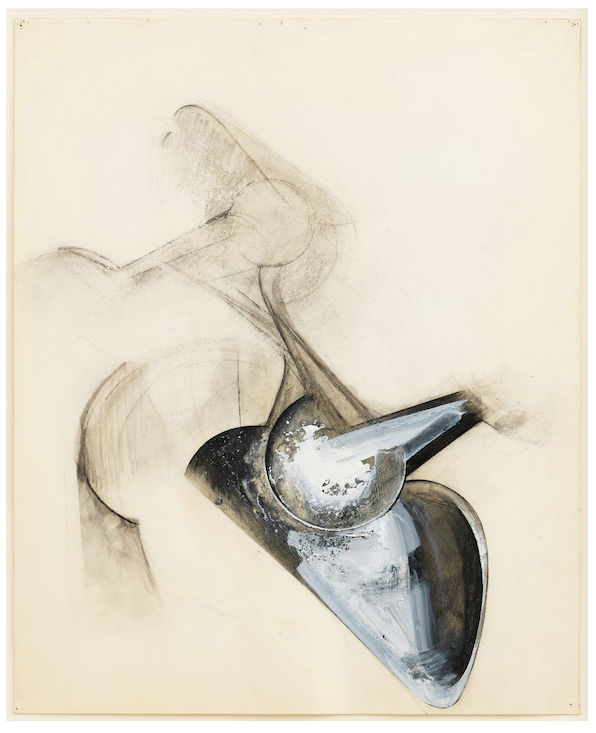
From my fascination with the Beat Era, I knew the name Jay Defeo and was familiar with her monumental The Rose that took her eight years to complete (’58-’66). It was exhibited at the Pasadena Museum in 1969 then languished for 25 years before it was conserved and is now on view at the Whitney. She had some notoriety back in the day…and with a name like Jay, it was possible to confuse her gender identification. After completeing The Rose she had several years hiatus and there were several years that she did not work for lack of studio space. She eventually continued to express independence in her art, photography, life and influence students at Mills College.

Tony Bravo’s review (10/16/20) in the SF Chronicle brought DeFeo back to mind and led me to the Gagosian website devoted to the exhibition Transcending Definition that presents a stunning slidehow of installation views and many of the mixed-media works in the exhibit.

To say that the revelations of these artworks “knocked my socks off” might be an understatement.

DeFeo 1 no caption
Untitled (Jewelry Series) 1977
De Feo 2 no caption
Pend de O’Reille No.1 1980
De Feo 3 no caption
Untitled (Shoetree Series), 1977

Serious scholarship considering DeFeo’s oeuvre continues to grow. In this conversation Natalie Dupecher from The Menil Collection and Leah Levy from The Jay DeFeo Foundation discuss the role that photography played in her experimental mixed-media works.

Let’s, one more time, take a step back to take a leap forward.

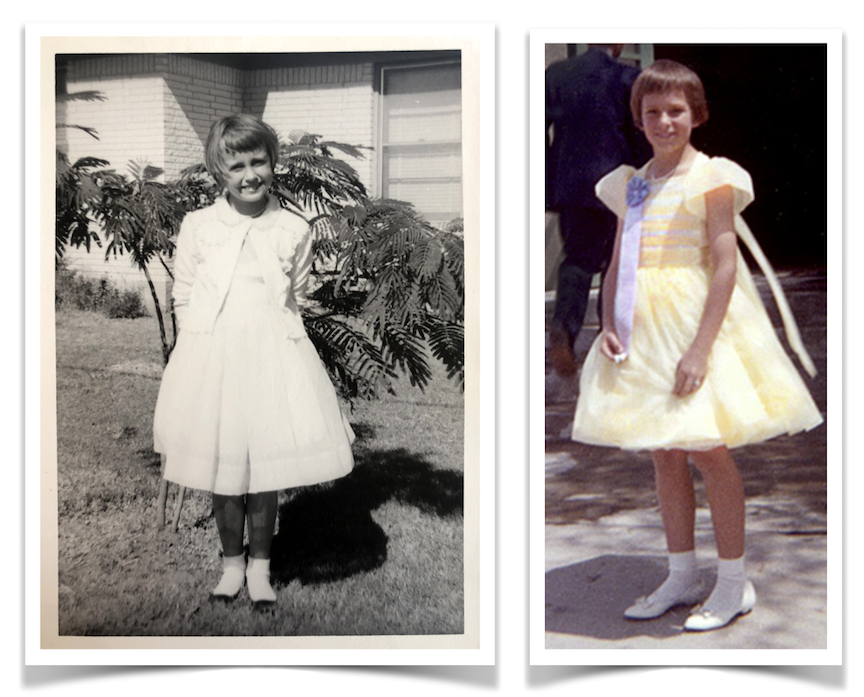
I was thrilled to learn about our Coleus connection. Now, I’m astonished to have found yet another connection in our dresses. Here we are… posing questions about: Where did we come from? and where we are going?

Dresses
                                              Judy                                                                                  Terry 

And anklets??? They are definitely knocked off!!!

Gratitude

Let’s meet Baroness Gloria Von Rysdale who says, “I can only give you what you already possess.” There is so much wisdom floating in the background, the real knowledge lives in the primary processes of consciousness unseen until the pictures are unlocked. How do you unlock this storehouse of Aladdin? Where is the “Open Sesame” key? Who has the key?

YOU have the key! YOU are the Baroness! The key is simply gratitude. As a working artist, isn’t it your desire to show the world the gifts you possess? To be the key for others to open their own Alladin treasure caves? What follows are little vignettes as links that show some examples. My suggestion is that you allow your own mind to dig in the soil of your own experience, then open the links.

Baroness Gloria

Let’s start with a list:

• Movies & Books that have taken you across the invisible line of your own resistance.

Tell the Baroness why you liked a certain movie or book. How did it alter your relationship to your place in the world? Has that experience changed your idea about what is important?

• Teachers who have shown the way. Mud? Mud!

• Landscapes riveted into the brainpan. Sheer of Light

• Art that has become radioactive (in a good way). Art you can’t forget.

Enough of this for now, but now that you are acquainted you can call on her, “Show me a picture, Baroness.” She never fails, so long as you feel gratitude. 

She can only give you what you already possess—you have a treasure house of gifts waiting to be opened, and the most important gift can be the gift of grief. What you have lost, though it is painful, it is the final gift to be grateful for.

If I had roots…

The Secret Life of Plants when published in 1973 was considered kooky, new-agey, pseudo-science and granted, many of the theories that were considered to be fringe have been debunked. Nevertheless, the book still stands as place marker in my early gardening education and did influence my back-to-the-land years.

It was filled with ideas that then seemed crazy, like playing music to encourage growth. Today Granddaughter Clementine insists that corn grows better with rock and roll. Scientists consider that it might not be the music per se but the vibrations that stimulate movement in plant cells that produces growth. Either way, who doesn’t enjoy a little Roll Over Beethoven while turning and tilling the soil.

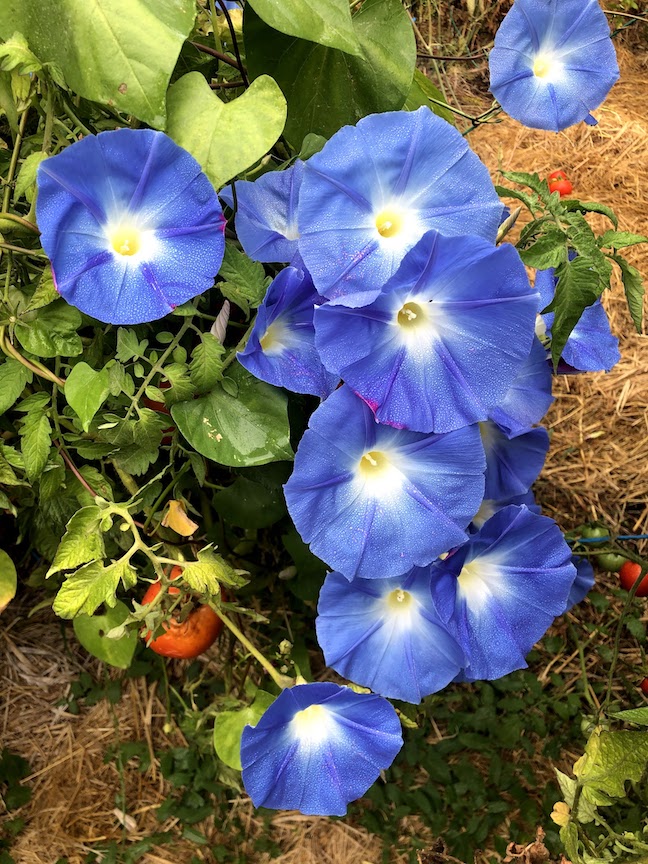
As tender, as appreciator, as consumer, I know first hand the beneficial effects of plants. Learning as I go along, gardening is a process not a product. I have learned to be attuned to plants need for water/nutrients and watch as they move towards the light of the sun. Gardening is a story of triumph and heartbreak. I’ve accidentally killed a few plants and the gophers have done plenty to aide in their demise. Some have suffered by being planted in the wrong place. Some have just failed to thrive. Try as I may, rhubarb has never done well. But, I’m champion with tomatoes and potatoes and spectacular with snapdragons and morning glories.

Morning Glory sm IMG_0519

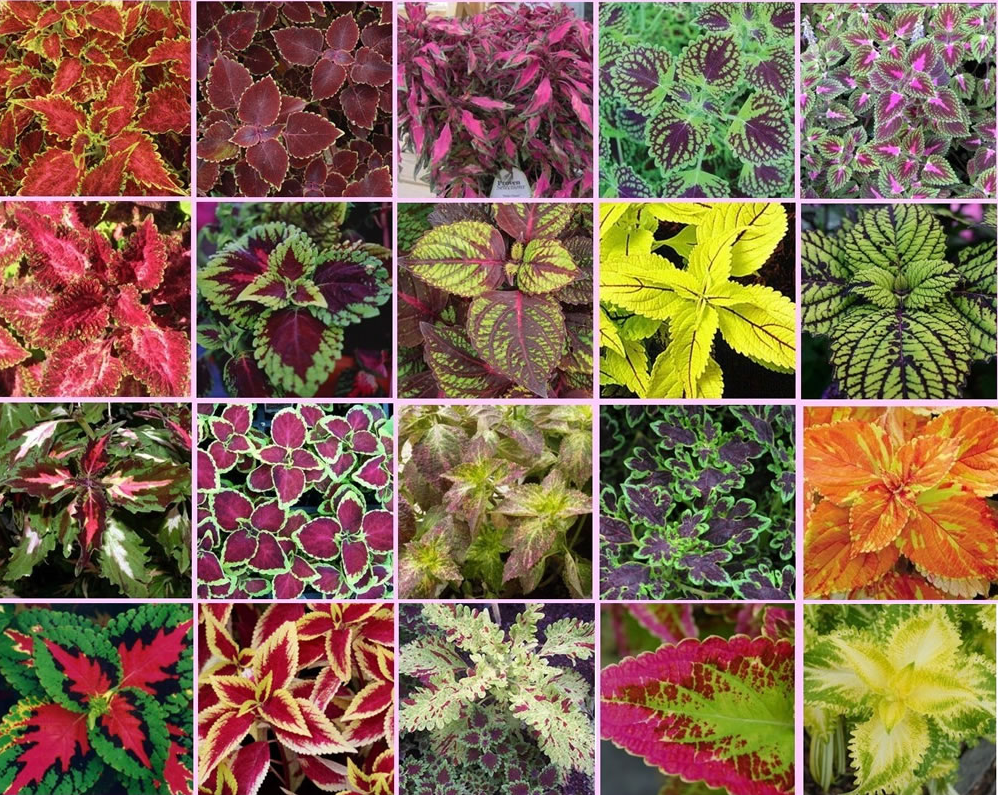
It was Coleus that first captured my growing imagination. Back in the 70’s during the houseplant heyday, they were the easy success plant for budding green thumbs. So easy to grow, cuttings easy to root. Rows of Mason jars on the kitchen window sill —jars with murky water thick with leggy tendrils of roots, spooky, like vampire squid specimens in a natural history museum. Those abundant roots made for robust plants. Coveted and shared, Coleus foliage with unusual (psychedelic!!!) patterns and color markings was the hippy plant par excellence. 

Coleus

Mind Games this week offers a meditation on finding one’s plant spirit guide. It can be listened to inside then once you have taken the instructions to heart, and now that the smoke has cleared, you can go anywhere, even outside in the yard to commune, to experience. 

The guided mediation is also posted on the Compass Rose page.

WAIT!!!WAIT!!!WAIT!!!

On Tuesday when the AMAZON PRIME DAY banner flashed across my computer screen, the word AMAZON sparked a distant memory of my trip through the Amazon rainforest where I was shown the healing plants/spirit guides of the indigenous peoples of Brazil. Digging deep through my boxes of memorabilia, I retrieved my photo album of that journey. The photos were taken with a compact Instamatic camera. Although, the negatives are grainy and the prints are not very sharp, they serve to illustrate…

AMAZON — worlds largest online retailer for shopping is working its way into every aspect of our lives…including subscription services, movies and media. On AMAZON PRIME DAY we are enticed pummeled with bargains on consumer electronics with the best tech deals of the year.

AMAZON — worlds largest river as a measured by volume of water and is disputed (vying with the Nile) as the longest river in the world. Any way you measure it, it’s big. The complex ecosystem is a massive intricate water way that encompasses hundreds of tributaries. Spanish soldier Francisco de Orellana was the first European to explore the length of the river in 1541. After encountering and engaging in battles with female warriors who reminded him of the Amazons in Greek mythology, he named it el Rio Amazonas.

In 1988, after attending a conference in Rio, with my companion Thomas Hanna, our flight back home had a scheduled stop-over in Manaus, capital of the state of Amazonas and the departure point for trips on the river and into the rainforest.

There are river trips aplenty with folded napkin luxury liners but wanting a more authentic experience, instead of booking ahead, we decided to just jump off (into the unknown) and let serendipity guide our way.

As we disembarked the plane there was a crowd of eager travel agents with slick signs touting their once-in-a-lifetime delux excursions down the mightiest river on the planet … see live piranha and live to tell the tale!!! 

Away from the clamor stood a lone woman with a simple cardboard sign——river trips. Quiet, sincere, just our style. She took us to her card table “office” where we signed up.

Amazon 1
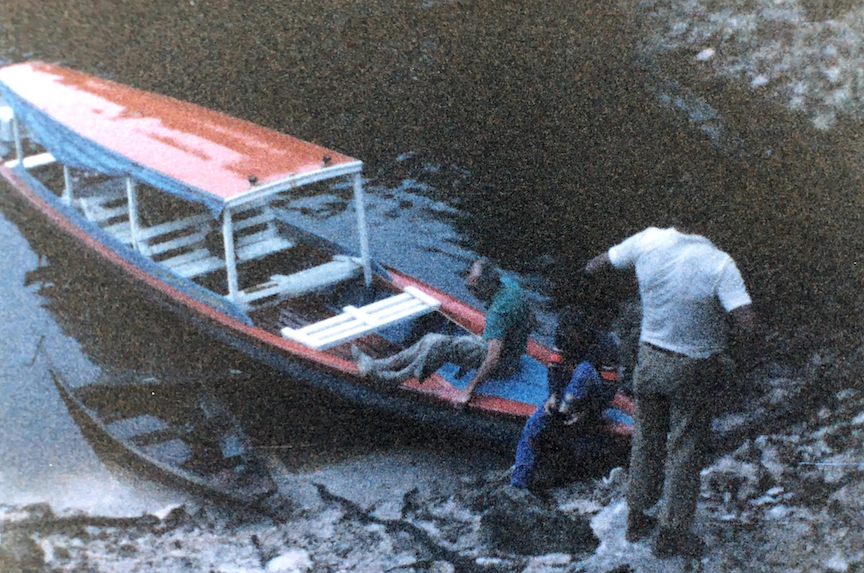
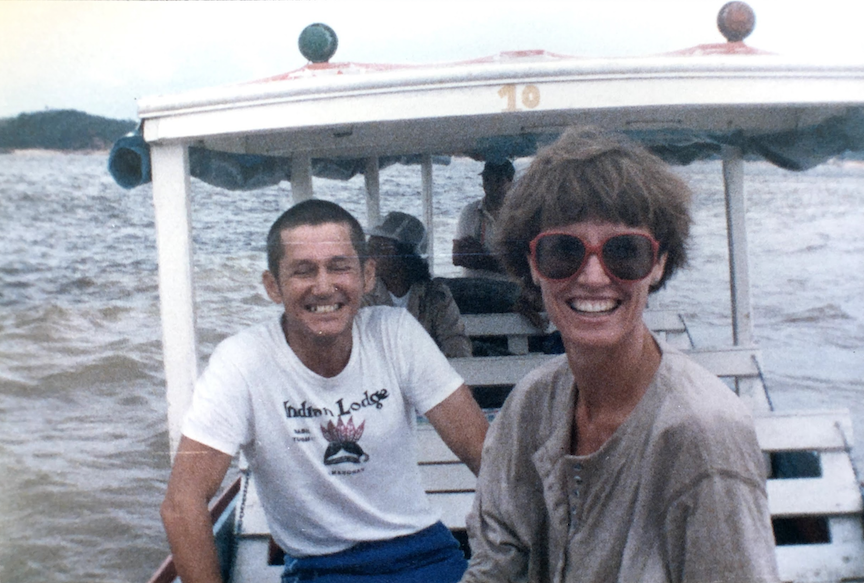
Next day at the dock — when we saw our “boat” open-to-everything, we knew we had gotten it right. Modest, indeed, with plenty of fresh air and easy access to the water. Just our group — Tom, me, the boat captain, the cook, and our interpreter/guide. All aboard!!!

Amazon 2
From Manaus, our guide wanted to make sure saw all the sights, including the popular tourist destination — the phenomena called the Meeting of the Waters, where the dark inky waters of the Negro River meet the pale ochre waters of the Solimões River, flowing side by side for miles without mixing.

River color
Top: dark water from the Rio Negro                      Bottom: sandy-colored water from the Rio Solimões

Amazon 12
We had no idea where we were going or where we would end up. Were we fool-hardy to trust these complete strangers who were taking us by boat to who knows where? For hours we traveled down river until we finally reached a village, where we were graciously welcomed by the “committee.” It’s difficult to see that the building is up on stilts. During the rainy season, October to March, the area is flooded so the kids travel to school via canoe.

Amazon 6
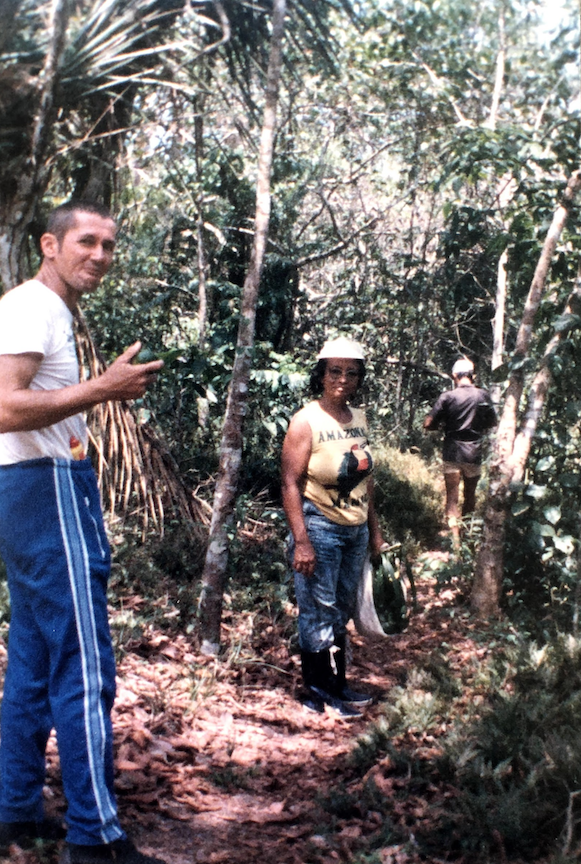
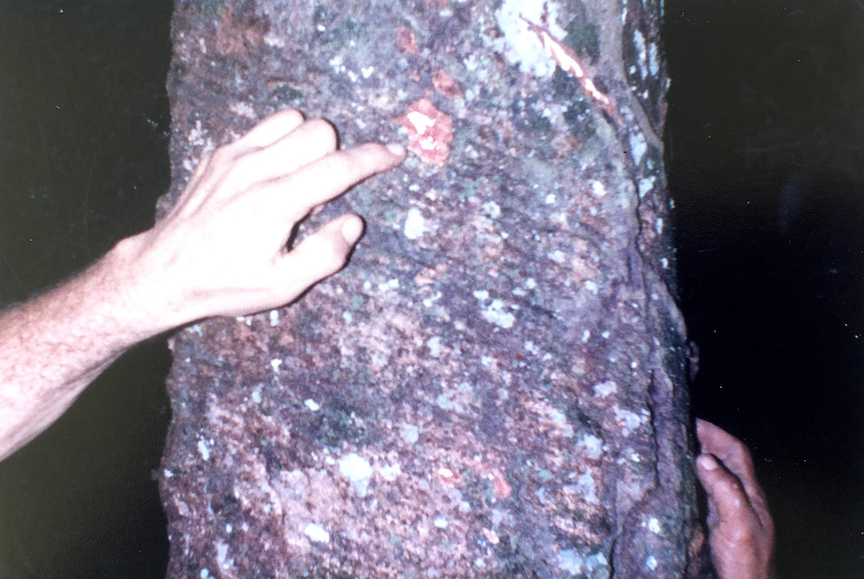
Our guide learned of our interest in plants and medicine so we were accompanied by the village Shaman, expert botanist, on a hike through the deep jungle who all along the way pointed out the beneficial plants. With more than 80,000 plant species, the rain forest is oft described as the world’s largest medicine cabinet with the benefits of thousands of plants yet to be discovered.
Amazon 7
Indigenous healers have known for centuries about the medical properties of barks and leaves. Knowledge about nature’s gifts has been passed on generation to generation. Arguments about the fate of the Affordable Care Act and the cost of drugs should include discussion about global warming, fires and the fate of the rainforest.  Cures for debilitating diseases and the future health and welfare of humanity might just be found in the bark of this tree.
Amazon 5
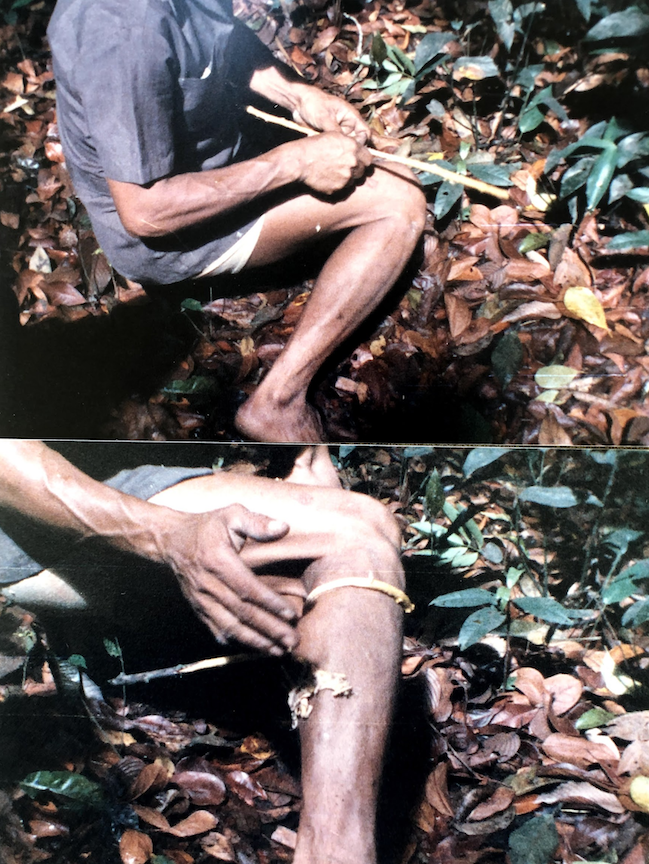
When there are no ambulances or hospitals nearby, what about wound care? All is not lost. A tourniquet using strips of bark can save a life.
Amazon 9
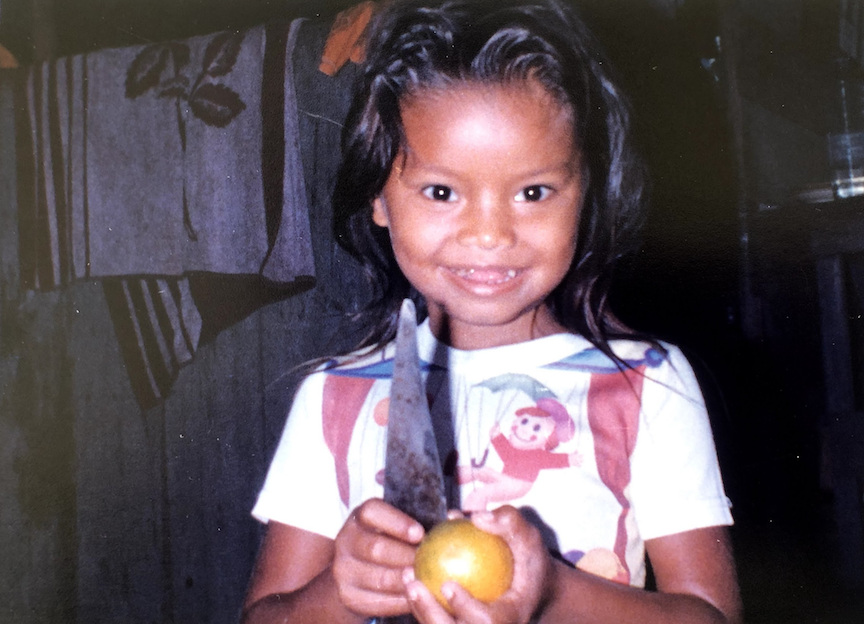
We’ve all heard that “laughter is the best medicine” and science confirms that a good laugh does wonders for body and mind. So how about a toothy smile (with a few teeth gone) from a girl who lives in the Amazon rainforest? Her smile will certainly cure anything that ails you.

*
*
*
*
*
*
*
*
*
*
*
*

*
*
*
*
*
*
*
*
*
*
*
*

*
*
*
*
*
*
*
*
*
*
*
*

*
*
*
*
*
*
*
*
*
*
*
*

*
*
*
*
*
*
*
*
*
*
*
*

*
*
*
*
*
*
*
*
*
*
*
*

*
*
*
*
*
*
*
*
*
*
*
*

The Blessing Way.

I’m wracking my brain to remember where I first heard of “The Navajo Blessing Way” — how to be a human keeping the highest values of being, functioning as part of the life lived. The result would be a Good Person. Doing your best with what you have. And then, passing out whatever gifts you have to others. Blessing Way People are always looking through the lens focused on “doing unto others…” 

My interest stemmed from a period when my  study of world mythology was heightened. There was avid attendance at the Jung Institute’s (SF) lecture series on that particular shelf of self-knowing. Something stuck about the three ways of being in The Blessing Way. To live a life inside one of those Ways it offered—The Medicine Way, The Warrior Way, and The Beauty Way. 

1955

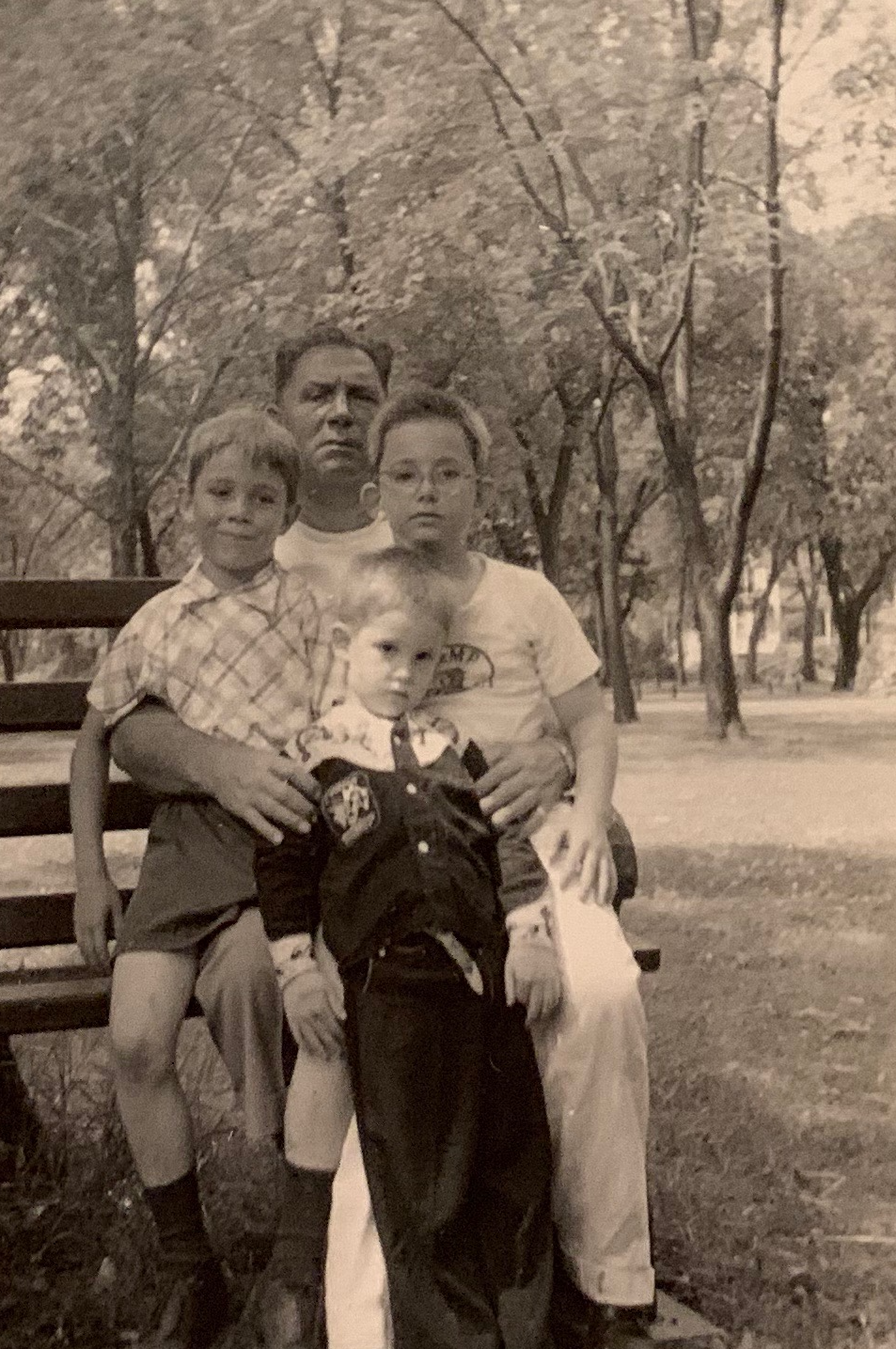
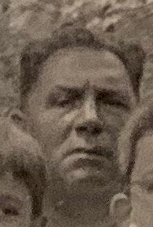
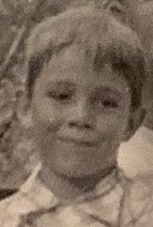
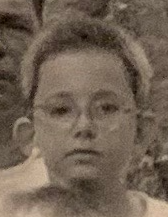
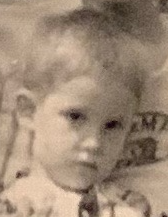
And, recently receiving this photo from my cousin Sara, taken in 1955, I could begin to parse the idea of The Blessing Way through this image. These three children seemed destined and chosen to follow a particular path, destined to be on the blessing way, each in their own individual way. Both in affect and effect…HEALING, POWER and ART.

So here we are sitting under the aegis of the protective father. A lot of Mea Culpa ink has been spilled about the ravages of the unchecked masculine, deservedly so, and a lot of it true, but this picture could be an illustration of the idea that there exists a muscular masculine mind protecting the followers of the Blessing Way, both in affect and effect.

Grand Father
Grand Father Paul “Papa”
David
Cousin David


Mike
Brother Mike


Richard
Me, The Rev

Self-reliance is the theme of this group of genomic fellow travelers. Self reliance— your fate and destiny is up to you. All three of these children forged a life you would recognize as as “wheels rolling out of their own centers.” That’s Nietzsche’s expression—a wheel rolling out of it’s own center—here are an artist, a doctor, a lawyer and a Grand Father forging lives as exemplars of the highest value one is capable of. The point—you are looking at all four people who did what they did navigating via an internal compass, relying on that self-generated compass, making a way in this world. 

David, the doctor — Medicine is the most obvious attribute of The Blessing Way. Imagine Dr. David Lang with his comforting hand on your arm, saying “You’ll be good as new.” Or, “I’m sorry about the pain, but we’ll take care of you the best way we know how.” I sat with David in his boyhood room, at Christmas break, (probably 1964 ) he, fresh from his Psychology 101 class at Yale, spun out a story of the work of Freud. The interpretation of dreams, specifically. I was a high school sophomore  and I was dazzled, sent spinning into a new world of the life of the imagination. By all accounts he is an excellent surgeon, though we’re told a bit of a workaholic.

Michael, the attorney—The law usually the bastion of money and power, changed the conversation from using the club of money, to battle out conflicts—a modern form of hand to hand combat—to using reason to to solve conflicts. He practically invented the art of Mediation and started the first graduate program for accrediting Mediators. In case you think he shied away from power this little moment may be illustrative…He was taunted by a wealthy uncle (the inventor of the plastic raincoat and the Burlington Coat Factory )  At the time, Mike was a lawyer for Legal Services, organizing a rent strike for denizens of Newark NJ. Uncle Fred says, “When are you going to come to reality and stop all this helping the poor and be a real lawyer?” “Fuck you, old man…” sometimes a shortcut between spirit and flesh is required.

Richard, the artist— I was a little defensive about my choice for The Beauty Way: 1) because I’m having entirely too much fun doing what I do every day, (if you call wrestling with angels fun…I do.) I’m awake every night at 3 AM ready to take dictation as my bedroom becomes the mountain top observatory. Those angels come flying in. Can you hear the weighty doors of the mind at 3 AM rolling aside to give that sliver of blackness, speckled with stars, access to the heavens? By what authority is this access given? Good question. 2) Because I feel special access has been given. (Not without struggle—did I mention wrestling with Angels?) To bring ideas, existing like the cyphers of math formulae, on the blackboard of the Institute of Advanced Studies, indecipherable to the uninitiated and bring that information into the world as beauty and form. To make a picture of thought, full of meaning, all on the great conveyer of culture. And then, dedicating a life to helping others by teaching and creating an institution where others could be expressive and enter the market place for making a living.

Paul, the Grandfather — The progenitor of all this Blessing Business is the guy on top.  Came here on the immigrant train (boat) fleeing a village where all the Jewish inhabitants would eventually be wiped out. That village, Kvarsk, Lithuania is memorialized at the Holocaust Museum. Papa brought well over 100 people to safety. As a kid, you felt protected as well as presented with a sea-mark to lay a course by. Excellence of spirit and action will alway be required. He had zero tolerance for the indolent. He had studied to be a Rabbi in the old country and in those politically fraught times had aligned himself with the Menshivicks, a faction most liberal, in opposition to the violence- prone Bolshivics. On the boat ride over he learned his first English idiom—”Time is money.”

If I had wings…

 
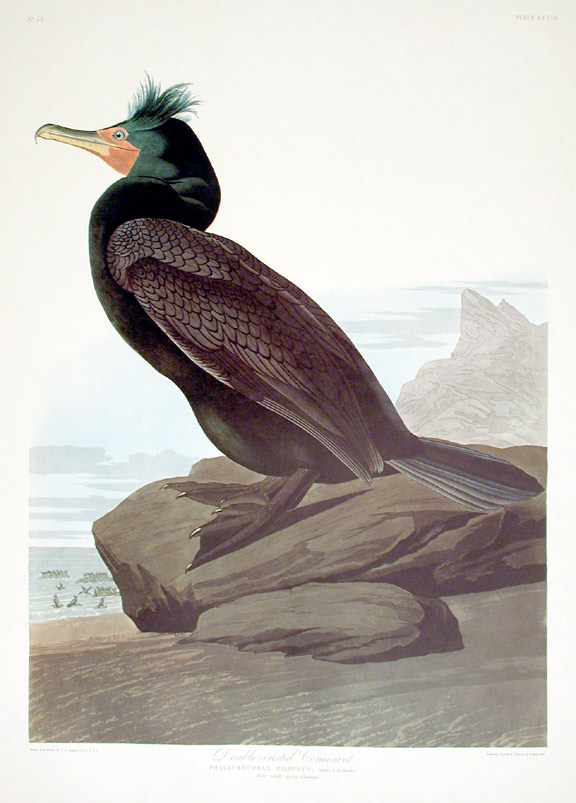
Comorant
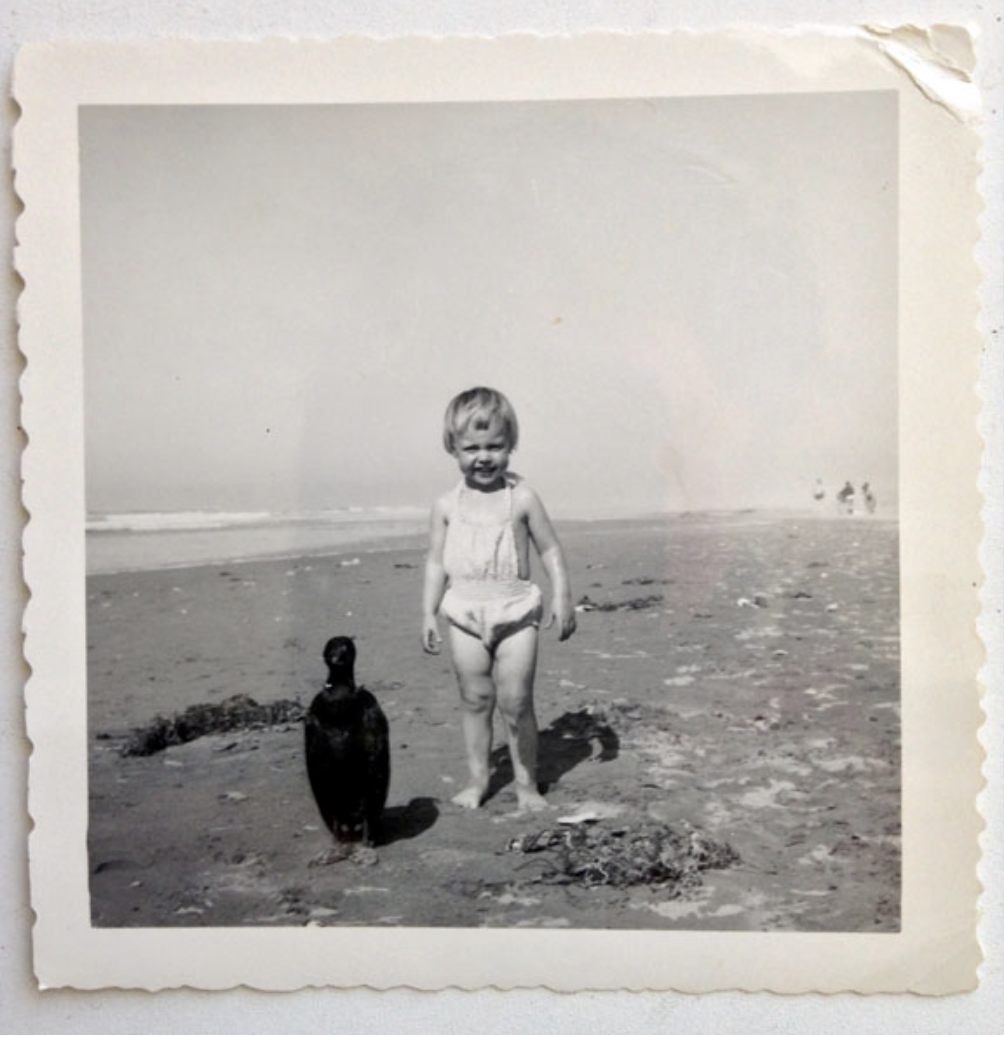
1952. Seaside, Oregon. It was a time when pleasures were simple—           a sunny day, a Cormorant, me —  two years old and already bird friendly.

Next up in the Mind Games book is a metamorphosis “game’ about finding and communing and becoming one with ones animal spirit. The guided instructions are linked HERE and posted on the Compass Rose page.

<><><><><><><><><><><><><><><><><><><><><><><><><><><><><><><><><><><><><>

In the 90’s I served on the Access Committee for the Fine Arts Museums of San Francisco. In that capacity, in conjunction with exhibitions, I conducted workshops for teachers/enablers who work with disabled and special education students, seniors in day care or convalescent facilities and people with mental and physical challenges. In preparation for the workshops, I was given an insiders look at the art, up close and behind the scenes.

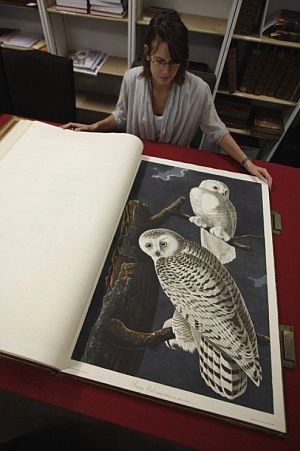
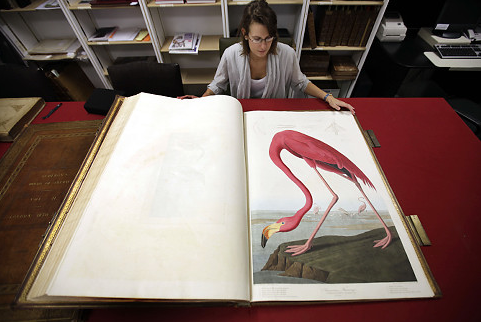
I had only known Audubon through the version of The Birds of America book I had, that measured a scant 14” x 10.” So when the Audubon paintings came to town, to the DeYoung, John James Audubon: The Watercolors for The Birds of America, Feb 3- April 14 1996 it was a life-changing experience to see in person the enormity of his double elephant folio pages measuring in at 39 1/4 ” x 26 1/4” with the birds depicted life-size. Although the prints are a wonder to behold, the only way to see the delicacy of his hand work is in the original and it takes a keen eye to be able to discern some of his techniques.

bird012312

Audubon folio

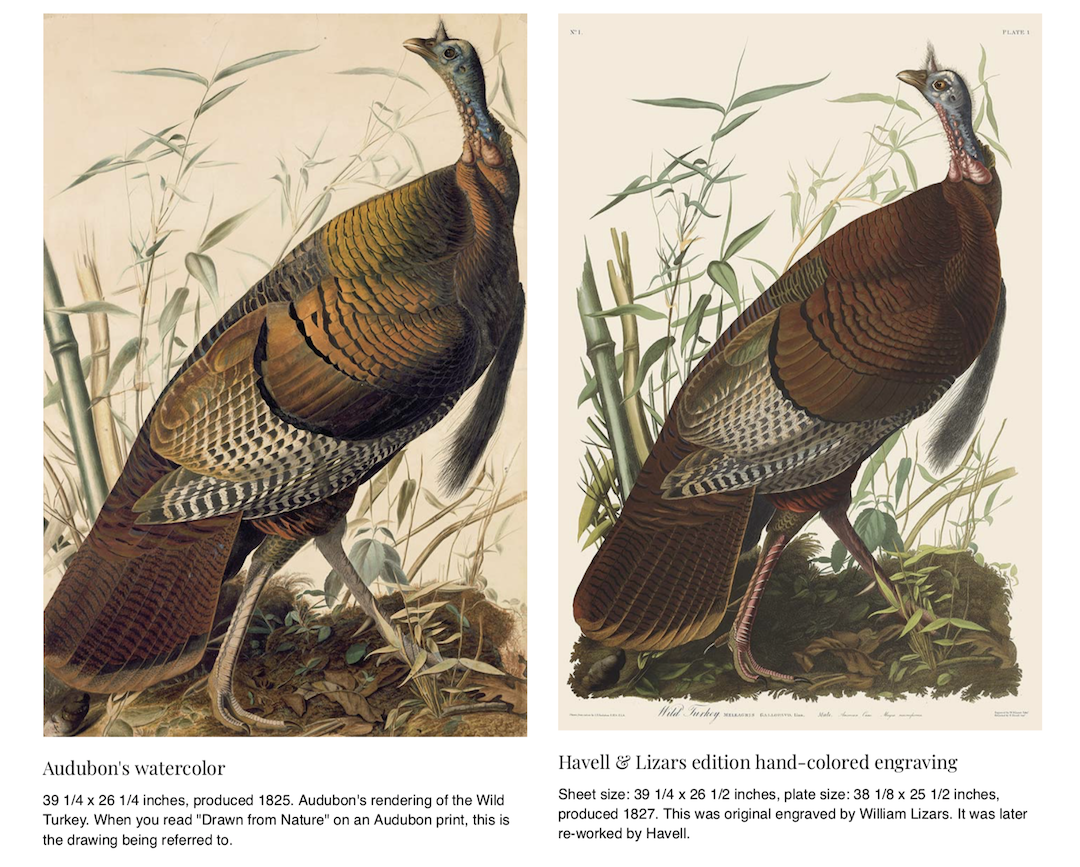
I had always only thought about Audubon’s as “prints.” It was a revelation to see his original artworks and to compare with the hand-colored engavings we have come to know in the folio plates.

Audubon watercolor-print copy sm

It was a shock to learn that he was a cut and paste guy. If he liked the bird but not the background, he would cut it out and change it up. Or, if an area was just not right, he would paper over it and begin again, integrating the correction into the original. Old drawings were re-purposed into new. Audubon’s use of a collage was unusual for an artist of that time and demonstrates his inventiveness as he would do anything necessary to accurately depict the bird and its environs.

Audubon‘s watercolors reflect his close observation of living birds. He usually drew and painted from a freshly killed specimen which he threaded with wire and then posed in a manner that was both characteristic of the species and aesthetically pleasing. He would place the specimen on a square grid to help replicate on paper the proportions of the bird. Audubon began by sketching the birds main outline with graphite that he would then paint with watercolors. He usually applied watercolor in a few thin washes but sometimes built up many layers and even used gouache to create dense areas of solid color. Later he would use the metallic sheen of graphite to enhance and clarify details and to add iridescence to the feathers. He used pastels to capture the soft textures of the birds plumage. Transparent glazes of natural gum or gelatin applied selectively made the eyes and the feathers shine and intensified the colors.

It was with Audubon’s expansive vision and permission to experiment, that I took flight with my own explorations. And, it was with Audubon, that I found my animal spirit.

<><><><><><><><><><><><><><><><><><><><><><><><><><><><><><><><><><><><><>

Quail, Hummingbirds, Jays, Crows, and Chickens are the avians with whom I have daily communication. They are not exactly wild. They depend on my regular tending — cleaning and filling of the hummingbird feeders, cleaning and filling of the chicken feeders.

Around here Scrub-Jays let everyone know who’s boss. They rule the roost as it were. This time of year they are busy storing up acorns for winter, secreting their stash, making sure that no one sees where they are caching their food.

Scrub Jays

Nearby the crows sit atop our apple tree pecking at the fruit while the deer wait below for the fruit to drop.

American Crow

Every morning a covey of quail circumnavigate our yard, churring and calling out to each other. From atop the fence post, a vigilant male reports about conditions ahead, announcing “all clear.” In a flurry of dust they all take a bath on our dirt driveway.

California Quail

It’s a busy place with the scurry and flight of these common everyday birds. But, these days, the dawn chorus seems different and scientists, in fact, report that it is. Since Covid sheltering began in March with a decrease in human and machine generated noise, birds are changing their tunes. Since they no longer have to compete at a higher volume, they are embellishing their songs. National Geographic has the story with audio clips of the birds before and during the shutdown.

Quiet is better for the birds and it just might be better for us.

<><><><><><><><><><><><><><><><><><><><><><><><><><><><><><><><><><><><><>

Arfie IMG_8802

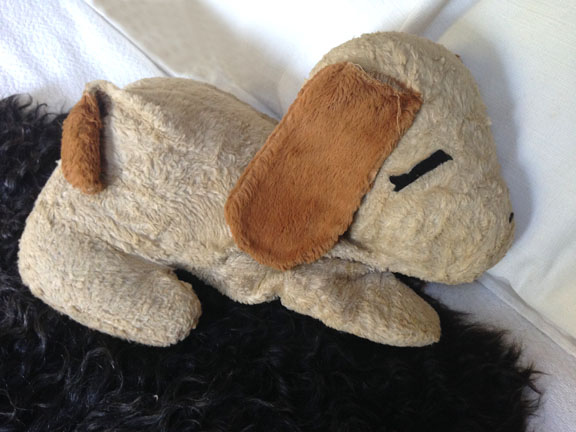
I would be totally remiss if I did not mention that long before I had even heard of having an animal spirit guide, “Arfie” my most favorite cuddle toy, snuggle puppy, was my confidant. At night, before going to sleep, I would roll up his long floppy ears and whisper my private thoughts and deepest secrets. His zippered pocket pouch was intended for stuffing PJ’s but I spent more time with my hand in the pocket feeling around the stuffing, searching for his guts, and for the life of him. Although “Arfie” is now tucked away in my foot locker with my other childhood memories, I treasure the nighttime dream hours we spent together. 

07641
Audubon’s Double -Crested Cormorant

<><><><><><><><><><><><><><><><><><><><><><><><><><><><><><><><><><><><><>

Post Script

October 1, 2020

Just when we thought the human news could not get any worst: this week it did. 

Do we really need to make a list to remind how bad it has gotten? The vitriol and ranting during the presidential debates set a new low. Fears are being stoked about the intersection of the flu season and the ongoing Covid epidemic. There is rampant unemployment with uncertainty roiling the financial markets. Fires are burning throughout the West. The air is a thick mix of fog and smoke, laden, claustrophobic. Even wearing a mask, rather being about taking care of your self and others, has been politicized.

It’s hard to not feel depressed. Amidst the gloom of these sad and challenging times we need to find ways to heal from the psychopathic politicians and greedy corporations.

Last evening, the birds did it. The Golden-Crowned Sparrows were right on time. At dusk I heard that familiar trill, whistled notes descending in tone, announcing “hey, honey, I’m back.” Back from their summer trip to Alaska, three thousand miles back to here, to winter over; their arrival is so reassuring, reminding that even if the human world is in trouble, birds will continue to sing. Just listen…

In 2012 Richard wrote Ming’s Return. Amelia returned and so did the Golden-Crowned Sparrows.

Into the Mystic.

L to R: David, Paul, Richard and Michael Lang


OK, I confess, I have visions. Why does this feel like a confession and not an exaltation? I guess because I come from a family of very practical people. The patriarch had escaped Czarist mayhem for Jews and worked hard to create a walled city of capital to keep those he cared for insulated from mayhem, Czarist or otherwise. When I told him I would not be coming into the business and going to art school he backed away as though confronting an insane person, unpredictable and capable of creating his own mayhem. “You are leaving a goldmine.” So I was a little equivocal about my visions. It was bad enough to make pictures for a living… I reveled in seeing music and tasting color (which helps out in the kitchen). I sometimes like walking in the woods barefoot on a warm day so to better feel the underfoot as a mental map of texture…I was used to mind pictures, using this to form and reform stuff into the sculptures I would make. It was a a labor saving device. This sense I’ve since found out is called synesthesia. I thought everyone was like this and probably is to varying degrees. But one evening it came from a different order of mind.

First I should probably say, that along the countercultural meander, psychotropic drugs were often offered and sometimes used to mostly vivid and positive effect. But this little vignette takes place in a period after son Noah was a born and was a crawling around little tyke. Laura and I had pledged not to do drugs or alcohol while we we were trying to figure out what having a child to raise up meant to our general behavior. This is the long way of saying that this experience was on the “natch.”

Noah was eight months old and a really adventurous and generally charming child. Friends visiting, up from Chicago were curious and dubious about this new state of affairs. Baby?? What’s that got to do with making art? We were all hardcore and dedicated in our cohort and knew no one else in their mid-twenties attempting children plus a life of art making. 

At this point we were winding up our stay in Madison—we’d left our little place in the country, though we adored growing a garden, both of us. Wisconsin winters will box the —“Yippie! Country Living,” right out of you. So we had moved into married Student Housing for our final semester.

Our friends were art grad students at the U of Chicago. We loved arguing about art—art vs craft, Conceptual art vs whatever. It was a strange time in the arts. The Modern Project was over. What’s next? The baby was not having it so I went into the bedroom to see if I could get him to sleep. Sitting in the rocker, I started my breathing exercises….calm calm, saying my mantra (of course, I had a mantra, didn’t you?). The baby finally slumps into that increase of gravity every parent knows.

It began with an increase in my own gravitational pull, hands becoming heavy, feeling huge, then the whole body began to feel heavy. My hands then felt like my whole body was in my hands, then there was a lifting. Yikes! What’s happening? Calm calm breathe breathe. My heart was thumping panic as I began to lift from the rocker.  Calm calm breathe breathe…mantra mantra…I was floating near the ceiling, seeing myself seated in the rocker. Then, as though disembodied into atoms, up and through the ceiling to seeing the complex of apartments and further into the night sky looking over the planet then up further into a fizz of bubbles where I became a bubble among a zillion bubbles. Happy? It was a feeling akin to falling in love and having the feeling returned, then “oh gosh, we have company…” The feeling of dropping 20 floors all at once and I was back in the rocker. And out to join the company…how long have I been gone? Fifty years, I think, as I write this fifty years later.

BUBBLIE